
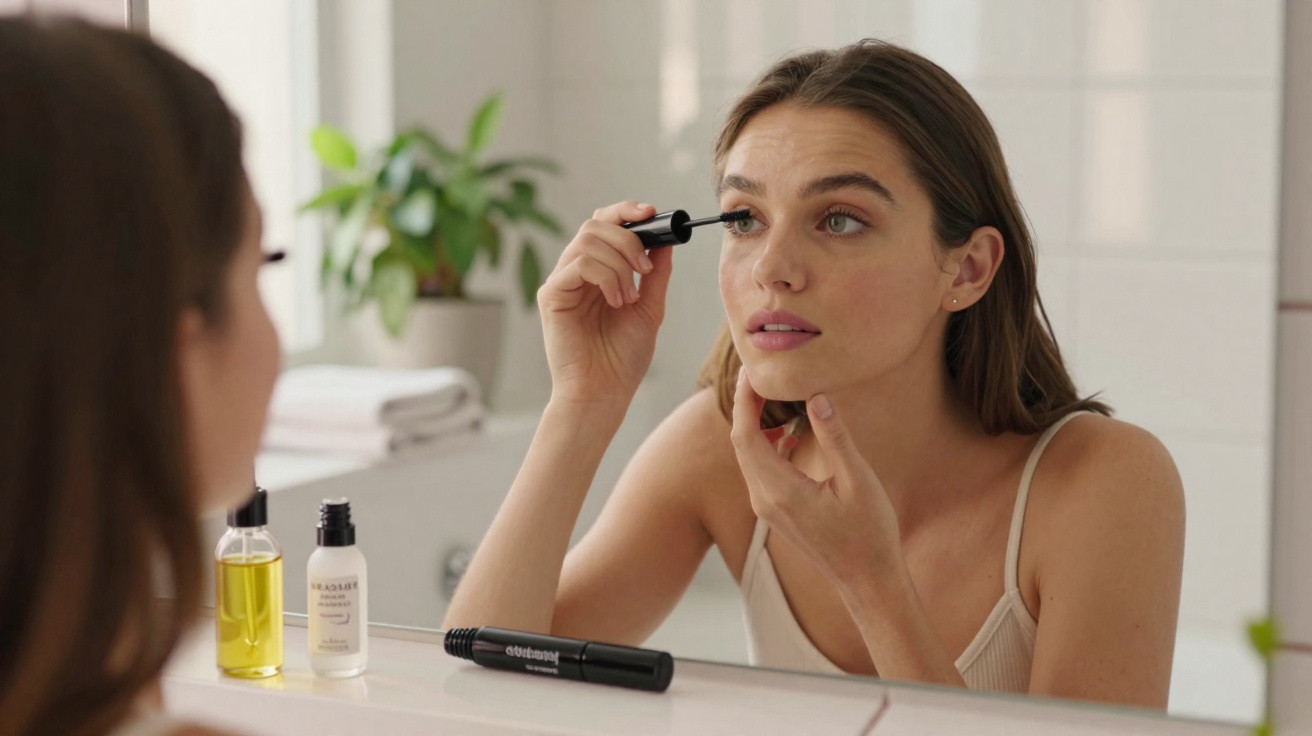
A new product is aiming to put an end to that trade-off.
Rather than choosing between flawlessly made-up lashes and gentler ingredients, a mascara with castor oil is now taking centre stage. It promises visibly fuller lashes while behaving more like a conditioning serum - and feeling as easy and wearable day to day as understated make-up.
Why conventional mascaras often disappoint
Many people know the pattern: lashes look great in the morning, then by mid-afternoon the mascara flakes or transfers beneath the eyes. On top of that, it can leave a hard, "cardboard-like" finish that comes back to haunt you at removal time. You end up rubbing more, and individual lashes can shed.
A lot of classic formulas are built primarily for impact: maximum pigment, maximum volume, maximum hold. Care and conditioning quickly become an afterthought. For fine lashes - or lashes that are already weakened - that can cause issues over time.
A modern mascara should not only look good, but also protect and strengthen the lashes at the same time.
That is exactly where the new trend comes in: mascara that sits somewhere between decorative cosmetics and an everyday lash treatment.
Mascara with a conditioning effect: what is it actually doing?
The current standout in this category pairs a creamy texture with an intentionally caring formula. On the first coat, the result is fairly subtle: the lashes are neatly separated, slightly lengthened, and softly coated. For many, that alone is ideal for the office or working from home.
If you want more drama in the evening, you simply layer it: a second or third coat intensifies the look without clumping or weighing the lashes down. The finish stays flexible, so even with multiple layers the hairs do not feel stiff.
Tapered brush for precise application
One key detail is the brush. Instead of a rigid plastic tip, this version uses a tapered fibre brush. The wider side grips the upper lashes, while the narrower tip makes it easy to reach the tiny hairs in the inner corner and along the lower lash line.
- Even distribution of colour
- Lower risk of clumps
- Fewer slips along the lash line
- Volume can be built up coat by coat
Each pass deposits only a thin veil of product. That creates a progressive volume effect, rather than overloading every lash with product in one go.
Castor oil as a lash booster: what can it really do?
At the heart of the conditioning formula is castor oil. This thick plant oil has been a long-running insider tip for fuller-looking brows and stronger lashes. It contains fatty acids that form a protective film and help the hair structure feel more supple.
Anyone who uses castor oil on the lashes regularly is opting for more elasticity, less breakage and visibly fuller-looking hairs.
In mascara form, castor oil is included at an everyday, wearable dose and combined with additional active ingredients. The result is a kind of "leave-in care" for lashes - delivered through a product many people apply daily anyway.
Hyaluron building block for extra softness
Sodium Hyaluronate is also included - a derivative of the well-known hyaluronic acid. It helps bind moisture at the lash root and along the surface of the lash. The upshot: lashes feel smoother, look less brittle, and tend to snap less.
The underlying idea is straightforward: make-up you use every day can take on part of the care routine. Instead of relying solely on a separate lash serum at night, lashes benefit from a gentler environment throughout the day.
A natural look instead of a mask-like finish
The shade reads as a deliberate middle ground: a natural black that makes the eyes look noticeably more defined without appearing artificial. On fair complexions it does not look too harsh; on darker colouring it blends naturally into the overall look.
This is likely to appeal to fans of the "no-make-up look": lashes appear thicker and more defined, but it is not immediately obvious how much product is actually doing the work.
Lightweight feel, long wear
Comfort is another selling point. The formula is intentionally lightweight and dries quickly. That means it is less likely to smudge onto the upper lid right after application, and it tends to leave minimal fallout as the day goes on.
In a panel of 84 testers, the feedback formed a clear picture:
| Experience | Share of testers |
|---|---|
| Feels light on the lashes | 93,9 % |
| Gives natural-looking volume | 91,7 % |
| Does not flake during the day | 85,7 % |
| Dries in a comfortable amount of time | 90,4 % |
| Makes the eyes look more intense | 86,9 % |
These figures suggest the focus is less on spectacular marketing promises and more on simple, reliable day-to-day use.
Clean beauty: suitable for sensitive eyes?
The formula leans heavily on naturally derived components: according to the manufacturer, 99 percent of the ingredients are from a natural source. The mascara is vegan and free from added fragrance, which is particularly relevant for sensitive eye areas.
If you react quickly to perfume or harsh preservatives, a pared-back, transparent formula can be beneficial.
Contact lens wearers and anyone who often struggles with dryness are increasingly looking for "clean" ingredient lists. A fragrance-free mascara can take some stress out of the morning routine.
Design and price: everyday-friendly rather than luxury theatre
Visually, the product is intentionally understated: a plain black tube, clean lines, and no attention-grabbing decoration. That fits the promise of being an uncomplicated everyday tool.
With 9 millilitres of product and a price of 19,90 euros, this mascara sits in the mid-range: more expensive than typical chemist options, but clearly cheaper than many luxury brands. For anyone already considering investing in a lash serum, it may feel like combining two steps into one product.
Who is a mascara with castor oil best for?
The concept of combining make-up with care is likely to resonate most with:
- People with fine, brittle or very light lashes
- Beauty fans who prioritise natural ingredients and vegan products
- Contact lens wearers and those with sensitive eyes
- Anyone who wants a flexible look - from subtle to more impactful
If you frequently use waterproof formulas and have to rub hard to remove them, switching to a conditioning mascara like this could reduce long-term stress on the lashes. Gentle removal still matters, ideally with lukewarm water and a mild cleanser rather than aggressive rubbing.
Risks, limitations and sensible combinations
As convincing as the concept sounds, even a conditioning mascara is not a miracle cure. Significant gaps in the lash line, illness-related lash loss, or severe irritation should not be tackled with cosmetics alone - they should be medically assessed.
Despite the high natural content, individual ingredients can still trigger allergies. If you have reactive skin, it is sensible to patch-test new products first on the forearm or apply a small amount only along the lower lashes. If redness, stinging or itching occurs, the product should be kept away from the eye.
It can also help to pair it with other gentle care steps: a nourishing oil at night on bare lashes, enough sleep, and a balanced diet with sufficient protein and biotin - all of which can further support healthy hair growth.
For many users, castor-oil mascara may ultimately offer one main benefit: not feeling forced to choose between a flattering lash look and healthier lashes. Instead, every coat supports the hairs a little on the way to greater strength and fullness - layer by layer.





Comments
No comments yet. Be the first to comment!
Leave a Comment