
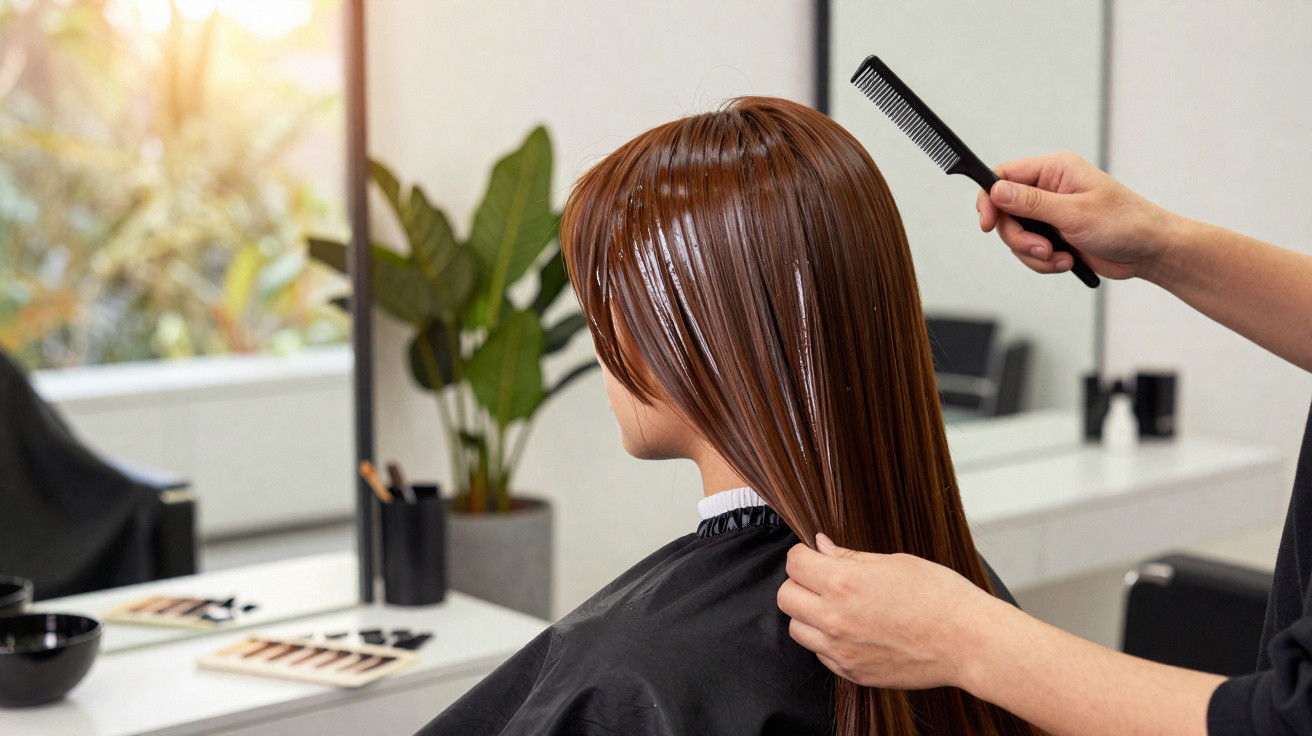
An old colouring classic is making a confident return.
Anyone who’s been to the hairdresser in the past few years will recognise the routine: a few face-framing pieces here, some highlights there, all aiming for that “sun-kissed” and effortlessly natural finish. In spring 2026, that long-running look is facing real competition. Salon professionals are reporting a clear shift towards a uniform, clean hair colour that feels surprisingly current.
The new star: completely single-colour hair
The trend’s name is straightforward, but the impact is anything but: single-colour colouring from roots to ends. No tricks, no contrast, no scattered highlights. The concept is one continuous shade that reads as a smooth, uninterrupted block of colour across the entire head of hair.
"Instead of complicated colour gradients, clear, saturated tones are coming into focus – and that’s exactly what feels incredibly fresh right now."
Where balayage relies on light reflection and soft transitions, this new all-over approach leans into precision and calm. It looks intentionally “done”, rather than “purely natural”. These shades, in particular, are showing up repeatedly in salons and across social media:
- Bright, but not brash, light blonde
- Rich chocolate brown with no lighter pieces
- Deep black with mirror-like shine
- Warm copper or cinnamon red as a statement
Here, the colour itself carries the look-rather than an intricate game of light and shadow. That’s why many stylists describe it as a kind of “back to basics” moment in colouring.
Why solid colour feels so modern
Fashion and beauty move in cycles. After years dominated by effects and “Instagram hair”, there’s a growing appetite for something more defined. Single-colour colouring fits that mood precisely: it communicates structure and quiet confidence, with a touch of severity that can read instantly premium.
It also pairs exceptionally well with minimalist dressing-blazers, clean lines, simple silhouettes. If your wardrobe is streamlined, a busy hair colour can feel out of place; a single tone, by contrast, frames the face like a neat frame around a picture.
Even colour = more shine
One of the biggest benefits is simple physics: when the surface colour is uniform, it reflects light more evenly. Instead of a patchwork of light and dark, you get a continuous sheen. The result is hair that looks:
- shinier
- better cared for
- almost “polished”
That helps explain why TikTok and Instagram are full of the classic “hair flip” clips, where hair falls like a glossy curtain. Single-colour colouring makes that effect much easier to achieve.
Visibly thicker-looking hair – why the trick works
Lots of people want their hair to look fuller. Alongside layered cuts or volumising mousse, colour plays a bigger part than many realise. Lighter and darker sections can add movement, but they often reduce the appearance of density because individual strands and separations become more visible.
"A continuous tone makes the hair look like a cohesive mass from a distance – and that automatically suggests more volume."
For fine hair in particular, an even shade that’s slightly darker can be transformative. Light distributes more consistently, roots appear more substantial, and ends look less see-through. Even mid-length bobs can appear “fuller” and less wispy.
| Multi-tone colouring | Single-colour colouring |
|---|---|
| Looks lively, but often a bit busy | Looks calm, clean and structured |
| Can emphasise finer hair | Makes hair appear denser |
| More dependent on styling | Looks “finished” quickly, even day to day |
Less hassle: the aftercare is much simpler
Another reason so many people are switching to clear, uniform colour: upkeep is often far more relaxed than with intricate highlighting techniques. Balayage depends on delicate transitions-once they fade or blur, the colour can start to look patchy and needs correcting.
With a single, consistent shade, everything comes down to a clean base. As the roots grow out, you don’t necessarily get an immediate harsh line-especially if the chosen tone is close to your natural colour. For many people, that means:
- fewer salon appointments each year
- lower costs over time
- less stress because regrowth doesn’t feel constantly noticeable
In spring and summer especially-when you’re out more and don’t want to spend hours in a salon-this approach fits everyday life well. Once the colour is applied neatly, a gloss or light refresh after a few weeks is often enough.
What’s especially popular right now
Looking at what’s currently being requested in salons, a few favourites keep coming up. Single-colour colouring isn’t bland; it’s about subtle nuance within one tonal family.
Cool blonde instead of beach highlights
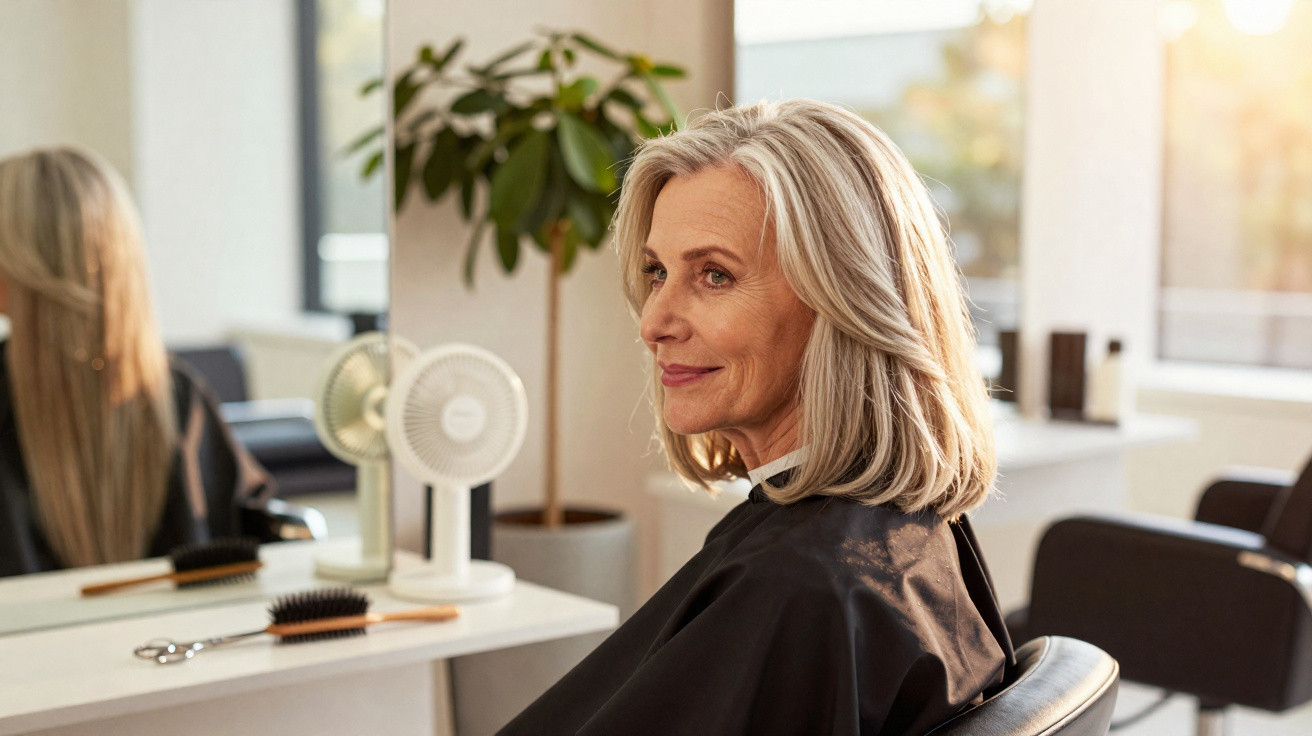
Rather than the classic “beach blonde” built from lots of highlights, many colourists are moving towards cool, even blondes. The roots are only slightly deeper than the lengths, creating a seamless overall effect-almost like a soft filter laid over the hair. It works particularly well with fair skin, strong brows and modern make-up with clean definition.
Chocolate brown with mirror shine
If you’re tired of “bronde” and in-between mixes, a dense brown can feel refreshingly decisive. Without lighter pieces, the colour reads more luxurious straight away. Adding shine sprays or hair oil amplifies the effect further. Longer hair benefits most, because every movement shows extra depth.
Red tones as a deliberate statement
Red and copper are enjoying a comeback anyway. In a single-colour version, the shade can feel like a fashion accessory in its own right. Choosing a bold copper naturally draws attention-yet it doesn’t require complicated styling every morning. The colour does the heavy lifting.
Risks and what to check in the salon
As simple as the idea sounds, the execution needs a skilled professional. A single-colour finish is less forgiving because nothing “hides” behind blended transitions. Uneven application shows immediately. And if you’re starting from heavily lightened hair, you may need several appointments to rebuild a rich, durable colour.
Before committing, clients should clarify a few points:
- Is the desired shade realistic on the current base?
- How much pre-treatment or lightening will be needed?
- What at-home care will keep the shine?
- How will the tone shift after a few washes?
Very dark shades or extreme black can look striking, but they can cause problems if you later want to lighten. If you don’t want to feel locked in long term, mid-browns or softer blondes are often the safer route.
How to make the trend work day to day
Single-colour colouring doesn’t have to look harsh or overly strict. If you’d rather ease into it, start with small changes-slightly intensify your natural shade, or choose a semi-permanent tint that gradually washes out. That gives you time to see whether the clean, defined look feels like you.
Styling matters too. Sleek, straight hair emphasises the uninterrupted colour panel most strongly, while soft waves break it up a little without losing the effect. If you wear a fringe, it can add definition as well, because the face-framing effect becomes more pronounced with one consistent tone.
It’s also worth pairing the colour with shine-boosting treatments, such as keratin treatments or dedicated gloss services. Combined with a uniform shade, you get the “healthy hair” finish that’s currently everywhere in feeds: simple, glossy, intentionally not playful-and precisely for that reason, very of-the-moment.
Comments
No comments yet. Be the first to comment!
Leave a Comment