
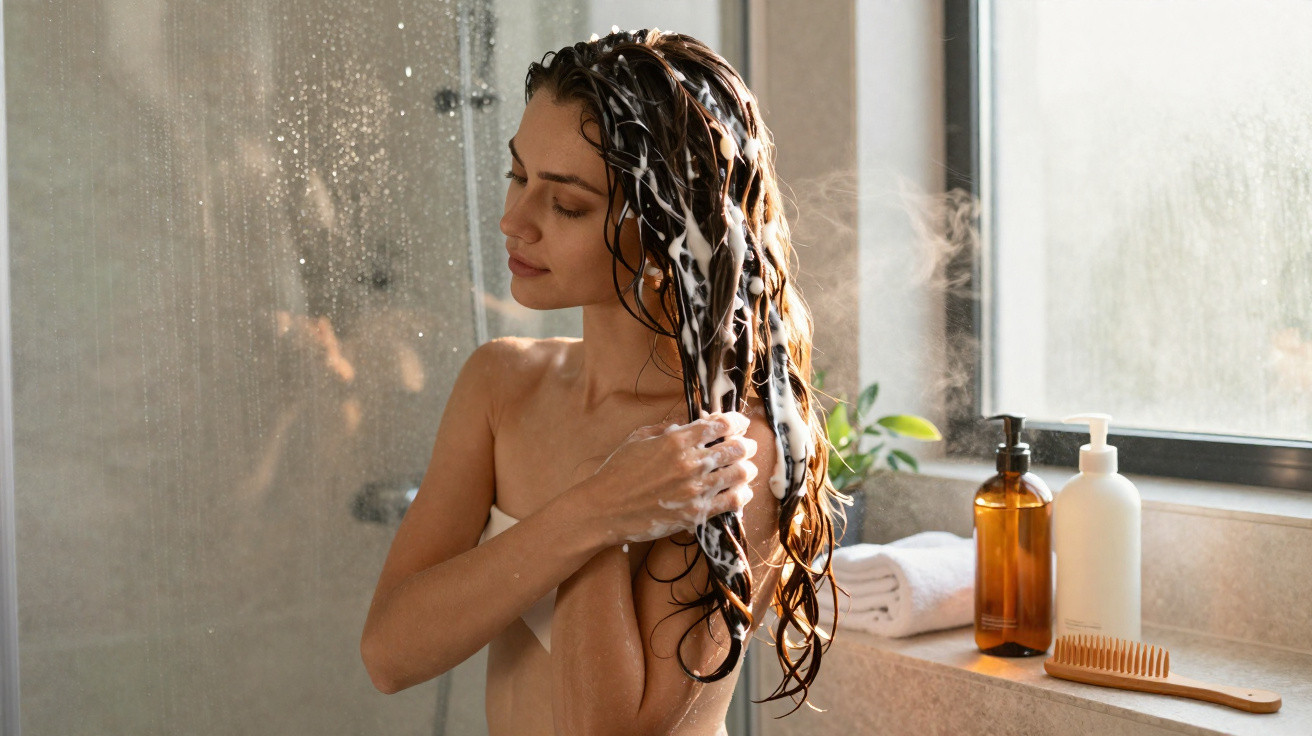
Hairdressers and specialists agree: conditioner should be applied before shampoo to allow it to nourish hair is a method that has been gaining traction among beauty professionals and anyone aiming for healthier-looking strands. This small change in washing order helps shield the hair fibre, boosts hydration, and lessens the dry appearance that can come from frequent shampooing. Alongside leaving hair feeling lighter and looking shinier, this habit can make a meaningful difference to hair health over time.
Why apply conditioner before shampoo?
When used before shampoo, conditioner acts like a protective veil over the hair. This can help stop cleansing agents from stripping away the hair’s natural moisture during washing.
To try this protective approach with affordable, easy-to-find products at home, it is worth checking out the DIY recipe shared by @FicandoGata. In the video, she walks through a step-by-step “boosted” pre-shampoo treatment designed to bring back vitality and rescue dry ends before you even start your shower.
Hairdressers and specialists agree: should conditioner be applied before shampoo to allow it to nourish hair?
Many professionals say this technique can deliver excellent results, especially for dry, damaged, or chemically treated hair. Because the strands receive a nourishing layer before cleansing, the chance of dryness is significantly reduced.
Experts point to several benefits that tend to show up after a few weeks of consistent use:
- Less frizz in dry hair
- More shine and softness through the lengths
- Reduced breakage while brushing
- A lighter feel without an oily look
Which hair types benefit most from this technique?
Curly, wavy, and chemically treated hair often shows faster improvements with this washing method. These hair types typically lose moisture easily and need extra support within a regular haircare routine.
People with fine hair may also like the outcome. Shampooing afterwards helps remove excess conditioner, avoiding the heavy feel that can leave fine hair looking flat and lacking movement.
Hair types that may benefit even more include:
- Bleached hair and sensitised strands
- Hair exposed to heat from a hairdryer or straighteners
- Hair with dry, dull ends
- Fragile strands prone to breakage
How to do this technique correctly
The steps are straightforward and can slot easily into your usual routine. Start by applying conditioner to the mid-lengths and ends of damp hair. Ideally, leave it on for a few minutes so the hair can better absorb the nourishing ingredients.
After that, apply shampoo mainly to the scalp, using gentle motions. The lather that naturally runs through the lengths is usually enough to cleanse the rest of the hair without fully removing the protective layer created by the conditioner. With ongoing use, hair can feel more hydrated, stronger, and healthier.





Comments
No comments yet. Be the first to comment!
Leave a Comment