
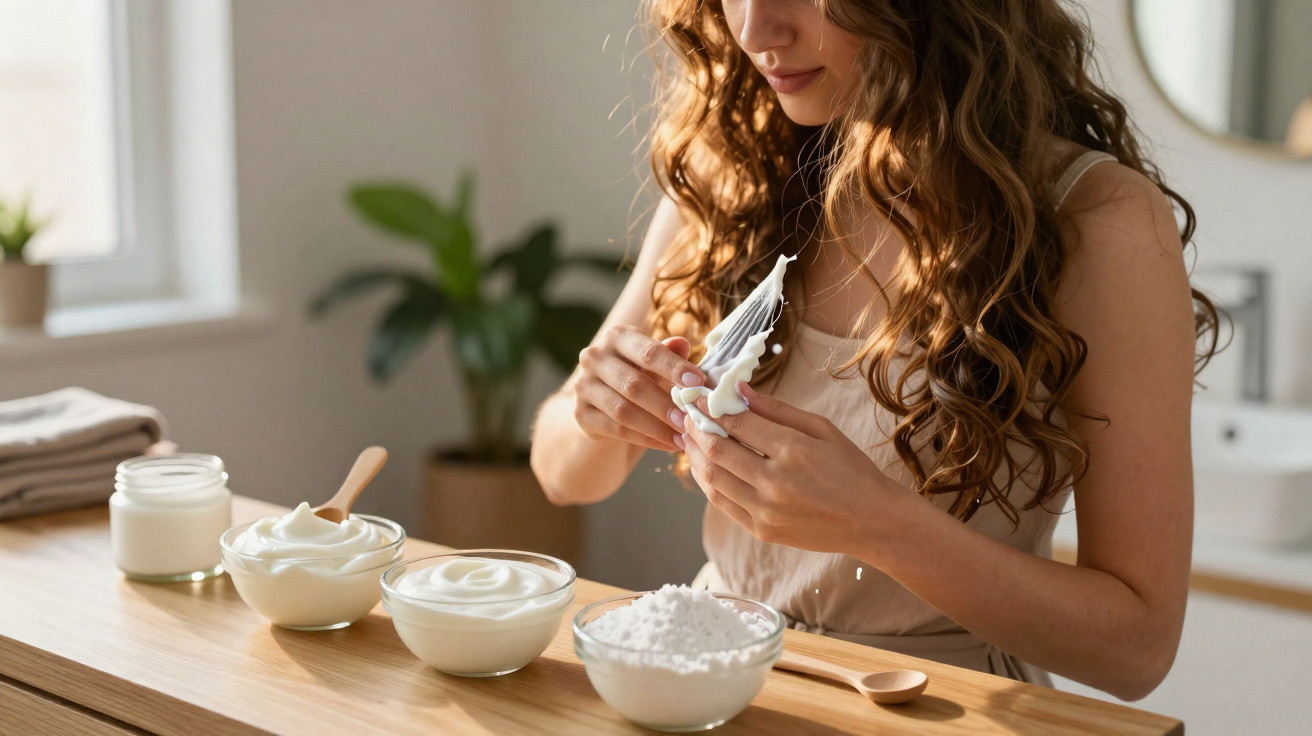
When hair starts catching on your fingers, loses its bounce and feels rough even after washing, simply using more hair mask will not always help. Instead, you can tailor the treatment with simple ingredients, selecting a blend according to the type of dryness and, above all, avoiding excess that may make the strands feel even heavier.
Before choosing a blend, assess what your hair needs
Not all dry hair behaves in the same way. Some strands become overly light and knot easily, while others develop a rough texture that is hard to smooth; thicker hair can remain stiff and dull even after conditioner. Recognising these signs makes it easier to choose a more suitable mixture.
- Choose starch with hair mask when your hair needs a creamier treatment that spreads easily.
- Consider natural yoghurt with hair mask when the lengths feel rough and tangle easily.
- Try coconut milk with hair mask when the strands are thick, dry and seem to need greater emollience.
Moderation is the key factor in all cases. Make each of the three options only for immediate use, apply it to the lengths and rinse thoroughly. If your hair loses volume, looks flat or feels greasy once dry, the mixture was probably too concentrated for your hair type.
Starch with hair mask can create a richer treatment
This blend is particularly suited to anyone whose hair feels dry, has plenty of knots and benefits from a hair mask with a thicker texture. Mix a small amount of starch with water until it becomes a light cream, allow it to cool, then add only a portion to the hair mask you will use at that time.
Apply it along the lengths and on the ends, where hair tends to tangle the most, and follow the mask's own processing time before rinsing it out completely. On fine hair, hair with little volume or hair that becomes greasy quickly, too much starch and cream can reduce movement and leave a heavy finish.
Natural yoghurt can be an option for rough strands
If roughness and difficulty running your fingers through the lengths are the main concerns, mix a small amount of unsweetened natural yoghurt into the hair mask. The aim is to achieve an even cream without using too much, making only the amount needed for one application.
Work the mixture from the middle of the hair down to the ends, keeping it away from the scalp, then rinse extremely well after the time stated on the mask. Very fine hair, or hair that already becomes soft easily, may lose its lightness with this combination, especially if too much product is used or it is applied often.
Watch the video shared by the YouTube channel Abner Matias, which offers tips on caring for dry hair.
Coconut milk with hair mask suits thick, very dry hair
Thick, stiff hair with a dry appearance may respond better to a more emollient blend. In this case, add only a little coconut milk to the hair mask and stir until it retains a creamy consistency. If the product becomes too runny, there is a greater chance of applying too much and making rinsing more difficult.
Focus the treatment on the driest areas of the lengths and the ends, without taking the mixture to the roots. For fine, straight hair or hair that loses volume easily, coconut milk can make strands flat and heavy. Starting with just a few drops is a simple way to see how your hair responds.
Using less product can produce a better result
These mixtures work best as occasional adjustments to your routine, rather than recipes that need repeating with every wash. Use only one combination at a time, apply a small amount and assess your hair once it is fully dry. Softness, easier detangling and movement are more useful indicators than a feeling of product build-up.
If hair is catching in the comb and losing its lightness, it is worth testing carefully before too many treatments make the routine even more complicated. Begin with the mixture that best matches your strands' behaviour, and immediately reduce the amount if you notice heaviness, greasiness or a lack of movement.






Comments
No comments yet. Be the first to comment!
Leave a Comment