
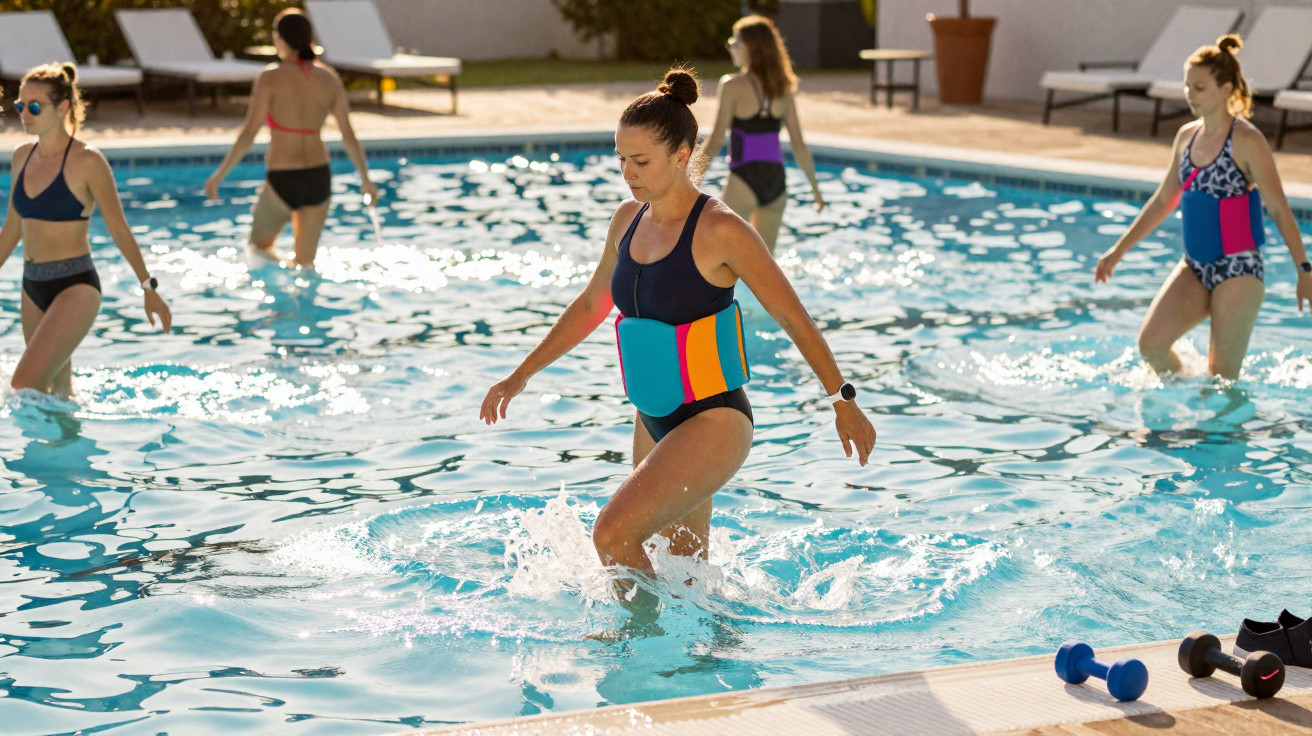
On the beach it can look like a harmless class for older people - yet this water gym session is, in reality, a seriously demanding endurance workout with a body-shaping effect.
When people think about exercise for weight loss, they usually picture jogging, the gym or HIIT classes. Meanwhile, at the edge of the sea or a lake, you’ll often spot groups in neoprene suits and swim caps apparently plodding calmly through the water. That very movement - sometimes mocked - can, according to experts, do a surprising amount for body weight, muscle tone and cellulite.
What’s really behind Aquawalking
This sport is known in the UK and Europe by names such as coastal walking, Aquawalking or “sea marching”. The idea is broadly the same: you walk briskly through the sea, a lake or a large outdoor bathing lake, with the water level roughly between navel and armpit height. Groups often move into small waves; some sessions also use paddles or gloves to increase resistance.
Because water supports the body, you only carry a fraction of your usual weight. That gives the knees, hips and back a break from the impact that can cause issues when jogging. At the same time, your muscles have to work against water resistance - which is much higher than air resistance on land.
Aquawalking combines reduced joint load with intense muscle and endurance training - a mix many people only fully appreciate once the delayed-onset muscle soreness kicks in.
Many classes are designed with older adults in mind, precisely because the joints are protected. That’s where the “pensioners’ sport” label comes from. But anyone who has marched quickly through hip-deep water for 45 minutes knows it has very little to do with a leisurely stroll along the shore.
How many calories you burn walking through water
Specialist swimming and watersports schools quote figures of between 500 and 550 kilocalories per hour for brisk Aquawalking in someone weighing around 70 kilograms. The exact total varies with pace, water depth, waves, body weight and fitness level.
What matters most is staying in the cardiovascular “endurance zone”. This is usually around 60 to 70 percent of maximum heart rate. In that range, the body draws more heavily on fat stores for energy.
- Moderate pace: heart rate slightly raised, you can talk easily - mostly carbohydrate burning.
- Endurance zone: breathing speeds up, you can still speak but not chat - ideal for fat burning.
- Very high pace: you’re gasping and speaking is barely possible - significantly more carbohydrate burning.
In water, the endurance zone when walking roughly corresponds to a speed of about 5 to 8 km/h. That may sound modest, but with a current, waves and deeper water it can feel unexpectedly demanding.
Coaches often advise a gradual start: warm up for 10 to 15 minutes - for example with a fast walk along the beach or in shallower water. Then aim to hold a steady effort in the endurance zone for 45 minutes. Beyond that duration, the body tends to rely more on fat reserves.
Why cellulite responds to water training
One major advantage of Aquawalking is what it can do for connective tissue and skin. The movement of the water acts like a continuous massage on the legs and glutes. At the same time, the coolness of the water encourages circulation and challenges the blood vessels.
The combination of massage, cold and muscular work strengthens connective tissue - and over time, cellulite dimples often look less pronounced.
Cellulite occurs when small fat deposits push outwards through weaker connective tissue. It’s not a medical emergency, but it bothers many people. Aquawalking tackles it via three mechanisms:
- Improved circulation: blood vessels repeatedly widen and narrow due to temperature changes and movement.
- Gentle water pressure: hydrostatic pressure acts like natural compression and can reduce fluid retention.
- Targeted muscle development: stronger thigh and glute muscles tighten the outline from within.
Many participants report, after a few weeks, less heavy-feeling legs, a firmer sensation in the skin and a more defined silhouette - even if the number on the scales barely changes. The body can reshape without dramatic weight loss.
Who benefits most from this watersport?
Aquawalking suits a surprisingly wide range of people - from beginners to athletes looking for complementary training.
| Group | Benefits |
|---|---|
| Fitness beginners | Low risk of injury, easy to learn, no complex movement patterns. |
| People with joint problems | Hardly any impact, knees and hips are protected. |
| People who are overweight | Buoyancy reduces strain on the body, making endurance training easier to start. |
| Runners and gym enthusiasts | Excellent cross-training, ideal for recovery and extra calorie burn. |
| Older adults | Cardio training without a high fall risk, supports balance and muscle strength. |
Another plus: most people train in groups, often with a coach or guide. That boosts motivation, adds accountability and helps those who feel unsure about unfamiliar conditions.
Getting started - step by step
If you want to try it, it’s not wise to head alone into unfamiliar open water. A supervised class is the better option - on the North Sea or Baltic Sea coast, at large inland lakes, or in coastal holiday regions.
The right kit
- Neoprene wetsuit or neoprene shorty, depending on water temperature
- Non-slip water shoes for shingle, stones and shells
- Close-fitting swim cap or hat in windy conditions
- Optional gloves or paddles for extra resistance
In open water, safety and the weather must always be taken seriously: currents, heavy waves, cold exposure and sudden weather changes can become risky. That’s why many organisers use clearly marked routes and fixed time windows.
Training frequency and pace
For visible effects on shape and wellbeing, one to two sessions per week is enough at the beginning. For your first few attempts, 20 to 30 minutes in the water may be sufficient to let your body adapt to the new load.
Over time, you can increase to 45 to 60 minutes. If you also keep an at least reasonably balanced diet, it becomes easier to create a solid calorie deficit without overtaxing your body.
How Aquawalking can be combined with other sports
This watersport doesn’t have to replace running, cycling or strength training. Many people use it as an add-on - for example on days when joints feel tired, or when the weather makes land-based running less appealing.
A possible weekly example:
- Monday: 30 minutes easy running
- Wednesday: 45 minutes Aquawalking in the endurance range
- Friday: strengthening exercises for core and back at home
- Sunday: 60 minutes walking or a gentle bike ride
This combination challenges muscles, the cardiovascular system and connective tissue alike, without overloading any single area.
What beginners should know before their first class
A few questions come up again and again: Is it suitable if you have heart problems? Do you need to be able to swim? How cold can the water be? The general advice is: if you have any pre-existing medical conditions, discuss starting with your GP. Many rehabilitation clinics and orthopaedic specialists still see watersports like this as a sensible option.
Being able to swim is a clear advantage because it increases confidence. However, many classes stay in shallow water where you can stand comfortably. Coaches usually brief you in advance on the route, water temperature and duration. If you feel the cold quickly, it’s better to begin in warmer months and avoid starting out in strong winds.
Worth noting: plenty of people who never enjoyed traditional endurance training stick with walking in water for surprisingly long. The mix of being outdoors, the group dynamic and the good post-session body feeling is, for many, more motivating than staring at a wall from a treadmill in the gym.





Comments
No comments yet. Be the first to comment!
Leave a Comment