
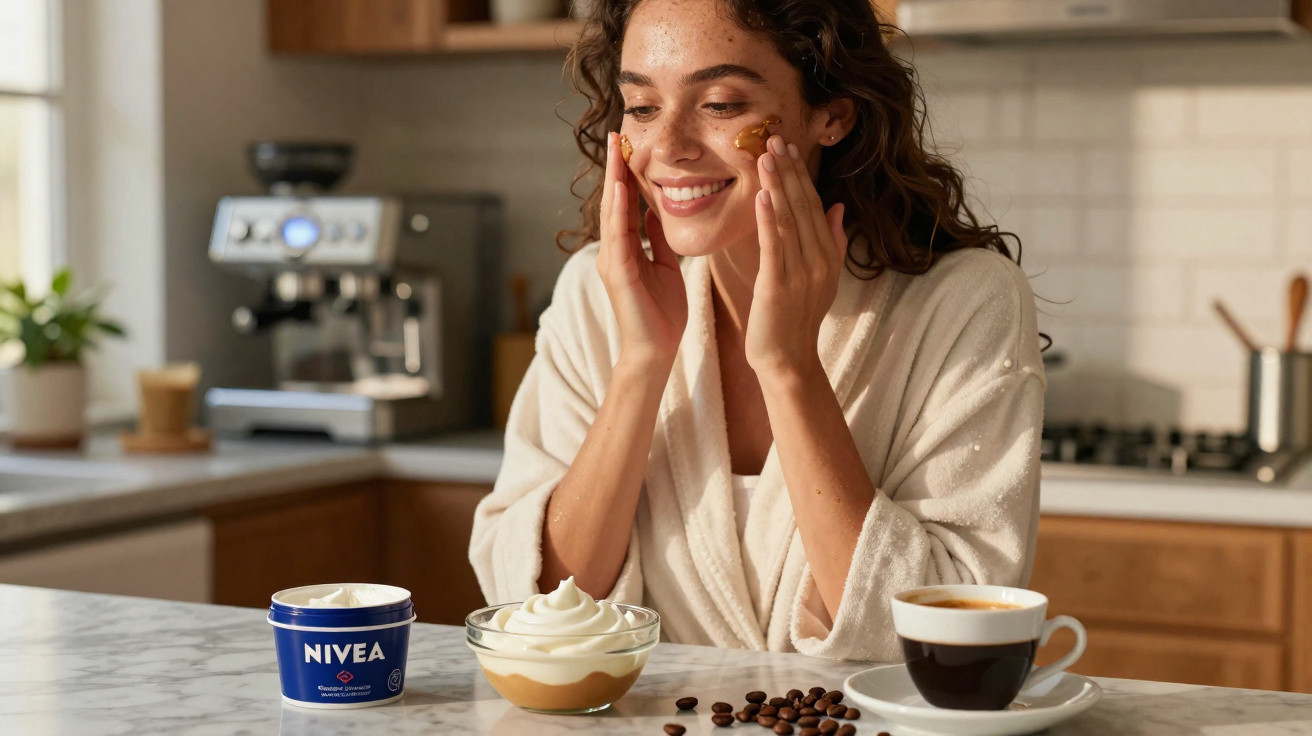
On kitchen worktops everywhere, people are combining a pea-sized dab of Nivea with a pinch of coffee, smoothing the creamy mixture over cheeks and under the eyes, then waiting for the glow-up. Baristas are doing double-takes - not because it’s unsafe, but because a morning drink ritual has somehow migrated on to skin.
It was one of those London mornings that carries the scent of rain and toast, and the café had that soft, steady buzz. A woman in a navy trench coat slipped a tiny blue tin from her pocket, tipped in a speck of instant coffee, and blended it in her palm like a secret mini cappuccino. People looked up - the barista included - as she patted the mocha-coloured cream along her smile lines and let it sit while her flat white cooled; a small, unhurried pushback against hurried mirrors and pricey pots. Then she tapped it in.
From the cup to the cheek: why this odd duo makes sense
At its heart, it’s cosy practicality with a dash of straightforward science. Classic Nivea cream is a rich, old-fashioned occlusive, and its glycerin helps hold water in the skin - which can make fine lines look a bit fuller for a few hours. Coffee adds caffeine and antioxidants, plus a whisper of tint that plays with light, so you appear more refreshed even if the night didn’t cooperate. Baristas are shocked because the bean has left the cup and joined the mirror.
Every beauty hack that catches on tends to come with a backstory. One creator films a 30-second routine before the school run; another insists her under-eyes look less swollen after a five-minute “latte mask”, and the comments quickly fill with questions and people trying it for themselves. It taps into that familiar feeling: the bathroom shelf starts to seem needlessly complicated, while the kitchen is simply… there - practical, lived-in, already warm.
So why can it seem as though it works? The cream’s occlusive layer slows moisture loss, leaving the surface looking smoother - as if you’ve held a warm flannel to your face. Caffeine is a vasoconstrictor that can temporarily minimise the look of puffiness, and if the coffee is very finely milled, it can act as the gentlest micro-polish when you apply with an almost weightless touch. It sounds ridiculous - and yet it’s not entirely illogical.
How to try the “Nivea x coffee” blend without wrecking your face
Aim for a tiny blend, not a scrub. Begin with clean, slightly damp skin. Soften a pea-sized dot of Nivea between your fingertips until it loosens a little, then add a very small pinch of ultra-fine instant coffee or a single drop of cooled, strong coffee, mixing until it turns a pale beige. Press it on to cheeks, the sides of the nose, and around the outer eye area (avoid the lash line). Leave it for three to five minutes, then either work in what remains or blot away any excess. Wash your hands, take a sip of your drink, and get on with the day.
Small adjustments prevent unnecessary chaos. Choose instant coffee or espresso powder rather than gritty grounds, and keep the mixture thin enough to glide instead of tug. If your skin is easily offended, patch test along the jawline first, and avoid piling on heavily fragranced extras that may not play nicely with the cream. Realistically, almost nobody does this daily - and that’s fine; two or three times a week tends to be the sweet spot for a subtle boost without build-up.
Treat it like a comforting cosmetic, not a cure-all. This hack won’t erase wrinkles, it may only soften how they look for a while. If you’re oily or prone to spots, keep it away from congested areas and make sure you cleanse gently at night, because occlusives combined with coffee oils can feel too heavy through the T‑zone.
“It smells like a latte for your face,” a barista told me with a laugh, “and honestly, the queue was into it.”
- Best suited to: normal to dry skin, morning puffiness, dullness.
- Skip if: you’re mid-flare with sensitivity, or you react to fragrance.
- Pairs well with: a hydrating mist first, SPF after. It will not replace sunscreen or retinoids.
What this trend really reveals about beauty right now
Trends like this take off because they feel manageable and familiar. A tin you remember from your nan’s bathroom, a spoonful of coffee you could measure half-asleep, and an effect that reads “I slept” when life says otherwise. People aren’t necessarily hunting for eternal youth; they’re aiming for a face that matches their actual day rather than a filtered one - and a routine that fits between boiling the kettle and tying a shoelace.
| Key point | Detail | Why it matters to readers |
|---|---|---|
| The mix is cosmetic, not medical | Hydration and a light tint can blur fine lines for hours | Helps set expectations and avoid disappointment |
| Texture matters | Use instant coffee or a cooled shot, never gritty grounds | Lowers irritation risk and supports the skin barrier |
| Routine still rules | SPF by day, gentle cleanse by night, active ingredients on other days | Lets the hack fit real life without throwing everything off |
FAQ:
- Is the Nivea and coffee mix safe for daily use? For most people, using it occasionally is kinder than using it every day, especially if your skin is sensitive or oily; think of it as a glow boost rather than a daily essential.
- Will it actually reduce wrinkles? It may make lines appear softer by moisturising and diffusing light, but it won’t alter the skin’s structure or replace proven active ingredients.
- Can I use fresh coffee grounds? It’s better to stick with instant coffee or cooled espresso; rough grounds can scratch and irritate, which is the opposite of the smooth finish you’re after.
- How long should I leave it on? Three to five minutes is enough for a quick perk; then press in or blot off any extra so it doesn’t sit too heavily.
- Will it stain clothes or pillowcases? Use a very small amount and let it settle before getting dressed; if you’ve used liquid coffee, blot thoroughly to avoid marks.




Comments
No comments yet. Be the first to comment!
Leave a Comment