
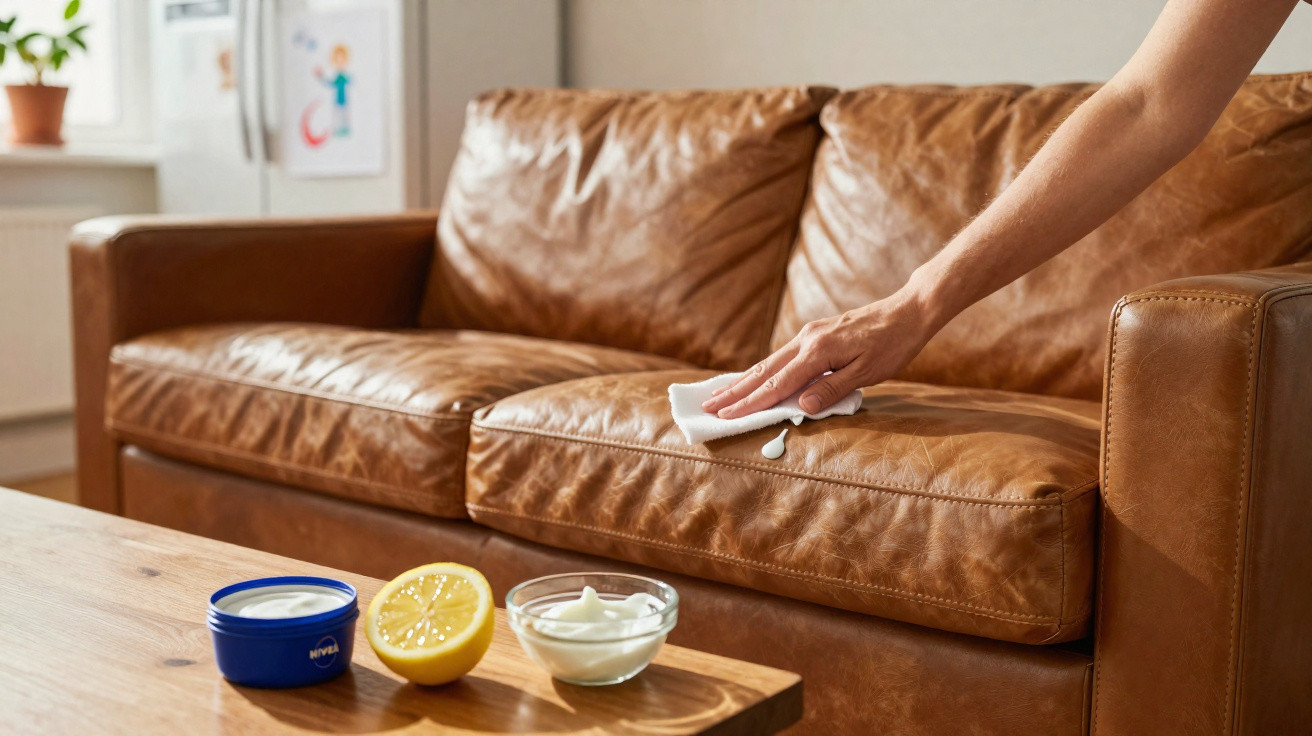
A surprising home remedy is circulating quietly through TikTok comment threads and family WhatsApp chats: mixing skincare cream with a little lemon juice.
A tip that once passed around European households has now caught on across English-speaking countries as well. The idea is simple: use classic Nivea cream with a small splash of lemon juice to “revive” leather jackets, sofas and handbags. Fans of the method claim it can make leather look fresher, reduce the look of cracks and bring back a bit of shine - using two everyday staples already found in most bathrooms and kitchens.
Why people are suddenly putting face cream on leather
Leather changes with use and time. It can dry out, feel stiffer, lose its natural sheen and collect surface marks from rain spots, city pollution or ordinary wear. Proper leather-care products are widely available, but plenty of households experiment with cheaper, familiar alternatives - which is exactly where this two-ingredient hack comes in.
The well-known blue tin of Nivea sits in countless bathrooms as a rich, occlusive moisturiser. Meanwhile, lemon juice - kept in the fridge - contains citric acid. Combined, they’re used as a DIY balm intended to moisturise leather while lightly brightening the surface.
"At the heart of the trend lies a simple idea: treat leather like skin, but with more caution and much less product."
On social platforms, the appeal is obvious: quick before-and-after clips show jackets seeming softer, bags looking a touch brighter and well-worn creases appearing less pronounced. That strong visual effect drives views and shares. Leather specialists, however, advise paying attention to what the mixture is doing to the material itself, not only how it looks on camera.
What leather actually needs to stay in good shape
Hydration without heavy buildup
Leather is treated animal hide, and its fibres behave a little like very thick, resilient skin. When those fibres lose moisture, they tighten up and the material becomes less supple. A very small amount of a greasy cream can work into the surface and help restore some flexibility.
Nivea is a water-in-oil emulsion. On leather that has become especially dry, applying a very thin layer can:
- Ease stiffness on elbows, shoulders and other high-flex areas
- Cut down the cardboard-like texture in older jackets
- Add a gentle sheen that feels more like healthy leather than flat dryness
The main problem is using too much. Over-application can:
- Leave tacky, greasy residue that attracts dust and pollution
- Darken certain leathers, particularly light shades or already moisture-heavy finishes
- Accumulate into a waxy layer over time that is difficult to remove
Many leather technicians suggest “micro” application: roughly a pea-sized amount spread over an area about the size of your hand, followed by thorough buffing.
Lemon juice as a light surface cleaner
Citric acid in lemon can break down light mineral traces and some dull surface films. When used sparingly, it may brighten a tired finish slightly or soften the appearance of small water marks. Used too boldly, the same acidity can lift protective coatings and bleach colour.
"Lemon in this context is not a stain remover. It behaves more like a mild, targeted brightener that must stay highly diluted."
On finished, smooth, pigmented leather - common on many high-street jackets and handbags - one or two drops mixed into cream typically remains near the surface and causes little disruption. On more porous, untreated or delicately dyed leather, the liquid can soak in and spread unevenly, potentially leaving marks that do not come out.
Colour, finish and what never to treat with this mix
Bathroom-and-kitchen solutions do not suit every type of leather. Specialists usually separate leather into clear categories:
| Type of leather | Typical look | Nivea + lemon suitability |
|---|---|---|
| Pigmented smooth leather | Even colour, slightly coated surface | Possible, with strict testing and tiny amounts |
| Aniline or semi-aniline | Visible natural grain, colour depth, slight shade variations | Risky, as it absorbs liquids; avoid on valuable items |
| Nubuck / suede | Velvety, matte surface, very soft to the touch | Never: cream and acid will stain, flatten and darken |
| Raw or unfinished leather | Very matte, often light, marks easily | Avoid, as it drinks in any grease or liquid |
If the surface looks fuzzy, velvety or highly absorbent, this is one trend best skipped entirely.
How households are using the hack at home
Patch test: the non‑negotiable first move
Professionals repeat one rule constantly: test first on a hidden section. Suitable spots include the inside hem of a jacket, under a handbag flap or the tongue of a shoe.
A commonly suggested patch-test process is:
- Dab a tiny amount of the Nivea–lemon mix on with a cotton cloth
- Leave it for around ten minutes without touching
- Buff lightly using a clean cloth
- Inspect colour and texture in daylight
If dye transfers onto the cloth, or the tested area looks darker, hazy, sticky, or develops a ring-like edge, it is a sign the item should not be treated.
Preparing the mixture
People who report the most consistent results usually keep the formula minimal. A typical method is:
- A pea-sized dab of classic Nivea cream on a soft cotton or microfibre cloth
- One or two drops of freshly squeezed lemon juice
- Optional: the same volume of water as lemon for dark or delicate leathers
Rather than mixing in a bowl, users combine it directly on the cloth to control quantity and reduce the risk of putting too much on the leather.
Application technique that avoids streaks
The most careful approach is to work in small sections. Owners treat an area roughly the size of their palm using slow circular movements and very light pressure. They also avoid seams, glued edges, branding, and metalwork where product can gather.
"The goal is a whisper-thin film, not a visible layer. If the cream shines on the surface, there is already too much."
After two or three minutes, a second dry cloth is used to buff thoroughly. This removes excess residue, evens out any remaining product and reduces greasiness. After buffing, many people notice a mild sheen - more like conditioned leather than a shoe-polish finish.
Drying and spacing out treatments
Leather needs time to settle after any treatment. Items should be left to air-dry away from radiators, direct sunlight and damp cellars. Heat can stiffen fibres; humidity can encourage mould if residue remains. Once the item is fully dry, some owners apply a tiny amount of cream alone (without lemon) to particularly dry patches and buff again.
This is not intended as a weekly habit. For jackets and bags, two or three light treatments per year is usually enough, provided everyday care remains sensible.
Why this hack resonates with households right now
Two wider trends help explain the popularity: cost-of-living pressure and rising interest in repair culture. Instead of replacing a cracked jacket or buying a full leather-care set, people reach for products they already own.
There’s also a strong emotional pull: a familiar cream from childhood, a clean citrus smell and the satisfaction of a quick visible change. It suits the short-form style of social media, where a 30-second clip can show a dull sleeve looking more supple after a quick buff.
Sustainability plays a part too. Extending the life of a leather item by a few seasons avoids the resources and emissions involved in buying new, especially when the piece is still structurally sound. When done cautiously, light home maintenance can keep everyday fashion items usable for longer.
Where the limits show – and when experts step in
The Nivea–lemon approach is aimed at surface dryness and mild dullness only. It will not repair a cracked finish, major colour loss or deeper structural issues. Cracking often reflects internal fibre breakdown, not simply dryness at the surface.
When damage is more serious, professionals rely on purpose-made products: glycerine soaps for embedded grime, pH-balanced cleaners, pigment creams matched to the original shade, and protective topcoats. These options cost more, but they are formulated to work with leather’s chemistry far more accurately.
Misuse of household products carries genuine risks. Strong lemon juice, perfumed oils, alcohol wipes and harsh detergents can strip coatings, create shiny patches or leave rings that buffing cannot disguise. Once a finish layer is compromised, restoring it often means recolouring and refinishing in a workshop.
Practical long-term habits that matter more than hacks
Away from viral tips, the biggest improvements usually come from basic routines. Consistent care reduces the chance of needing drastic fixes later.
- Wipe down jackets and bags weekly with a clean, dry, soft cloth
- If something gets soaked, let it dry slowly at room temperature - never on a radiator
- Hang coats on broad hangers that support the shoulders properly
- Store items in breathable fabric covers rather than sealed plastic
- Keep leather out of prolonged direct sunlight, which dries and fades it
The same principles apply to accessories. Handbags tend to age better when lightly stuffed with tissue paper before storage, helping them hold their shape and preventing deeper folds. Belts last longer when hung vertically rather than kept tightly rolled in a drawer. Shoes benefit from shoe trees and routine brushing before any cream is applied.
For anyone wanting a step up, a simple leather-care kit with a neutral cleaner and conditioner - used only a few times a year - is a more reliable option. In that context, the Nivea–lemon trick stays in its lane: an occasional, restrained brightening and softening step for compatible, everyday leather rather than a universal fix for every damaged piece.


Comments
No comments yet. Be the first to comment!
Leave a Comment