
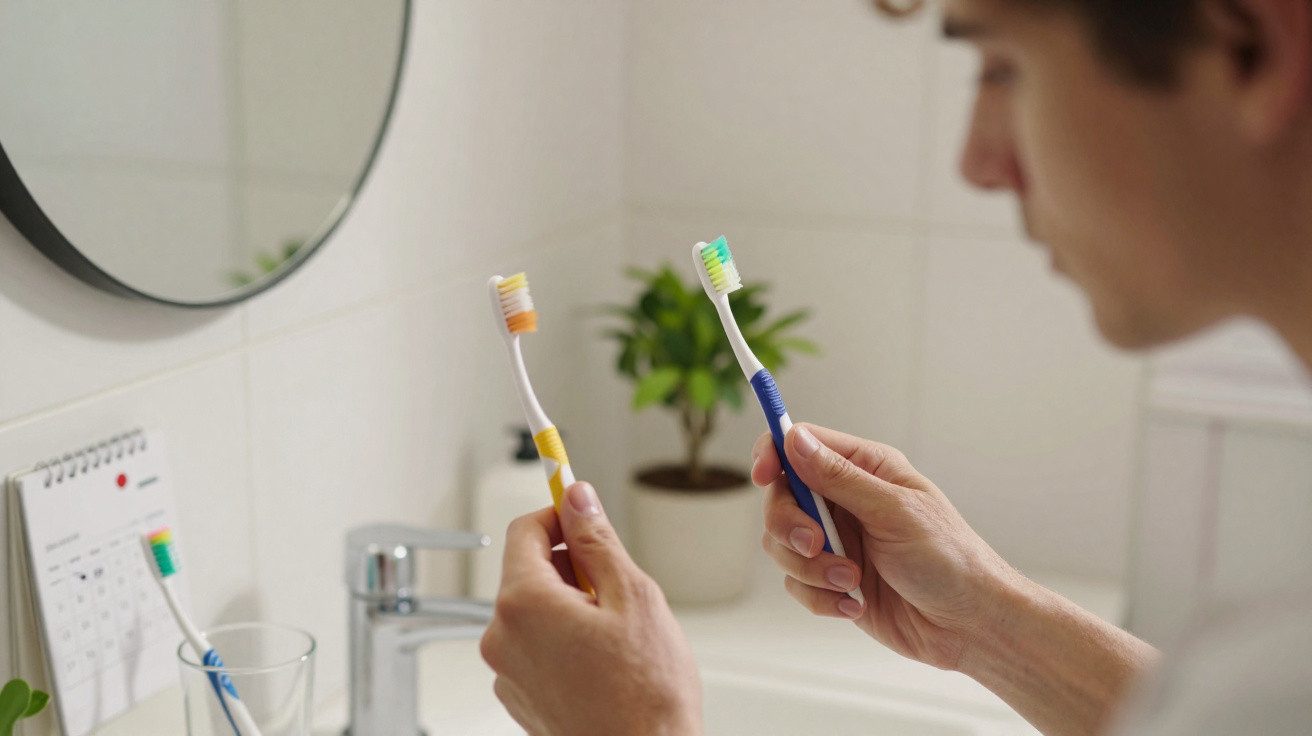
The best time to replace a toothbrush is neither every month nor once a year, because both extremes can cause issues. Worn bristles clean less effectively, hold on to debris, and can turn a simple routine into a risk for hygiene and oral health.
Why shouldn’t a toothbrush be used for too long?
With everyday use, bristles lose their shape, splay outwards and stop reaching key corners of the mouth. When that happens, brushing removes less plaque, which lowers the effectiveness of cleaning even when your technique is good.
Keeping the same brush for nearly a year also encourages a build-up of residue, moisture and micro-organisms between the bristles. At the other end of the scale, replacing it every month when there’s no need increases waste and cost without offering a real benefit.
Key warning signs include:
- Bristles: splayed or bent bristles suggest a drop in efficiency.
- Timeframe: three to four months is the general benchmark.
- Infection: flu or a recent illness calls for an immediate replacement.
- Drying: storing it upright helps reduce moisture.
- Bathroom: keeping it away from the toilet lowers the risk of contamination.
What happens to bristles after a few months?
A toothbrush is designed for oral hygiene, with bristles that reach teeth, gums and hard-to-access areas. Once those bristles deform, plaque can remain in important spots.
Split, flared tips may also irritate the gums if someone brushes forcefully, causing discomfort without improving cleaning. That’s why checking the bristle shape matters just as much as counting the months since purchase.
What is the ideal interval to change your toothbrush?
Dentists typically advise replacing a toothbrush every three to four months, as long as it is still in good condition. If the bristles start to splay before then, it should be replaced straight away rather than waiting for the calendar to reach the deadline.
Three to four months is the balance
The condition of the bristles matters more than the date
Replacing a brush that is still very new can be wasteful, but a deformed brush no longer does its job properly.
If someone brushes with too much force, a replacement may be needed sooner than expected.
Children and people who chew the bristles may need to change more often, because the brush loses its shape faster. A good rule is to use a three-month reference point, but visually check the toothbrush every week.
Use this practical rule:
- replace the toothbrush every three or four months;
- change it earlier if the bristles are splayed;
- check children’s toothbrushes more frequently;
- avoid using excessive force when brushing;
- write down the replacement date so you don’t forget.
When should you replace it immediately?
After flu, throat infections, mouth sores, or any episode of a contagious illness, changing your toothbrush is recommended. The aim is to reduce the chance of keeping micro-organisms in the bristles and to protect your care routine.
It’s also sensible to throw the brush away if it has fallen on the floor, been exposed to dirt, or stayed damp for too long inside a closed case. In these situations, saving a few days is not worth the risk of contamination and odour.
Replace it without waiting if there is:
- recent flu, viral illness, a throat infection or fever;
- bristles that are splayed, bent, stiff or very worn;
- the brush falling onto a dirty surface;
- mould, an unusual smell or visible dirt;
- accidental sharing with someone else.
How can you look after your toothbrush between replacements?
Much like deciding how often to wash towels and bed linen, moisture makes a difference to everyday hygiene. A toothbrush should be stored upright, in a well-ventilated place, allowed to dry, and kept away from the toilet to reduce splash.
Avoid putting a wet toothbrush into closed cases every day, because poor airflow keeps the bristles damp for longer. Rinsing it thoroughly after use and letting it air-dry naturally helps protect the mouth and maintains efficiency.






Comments
No comments yet. Be the first to comment!
Leave a Comment