
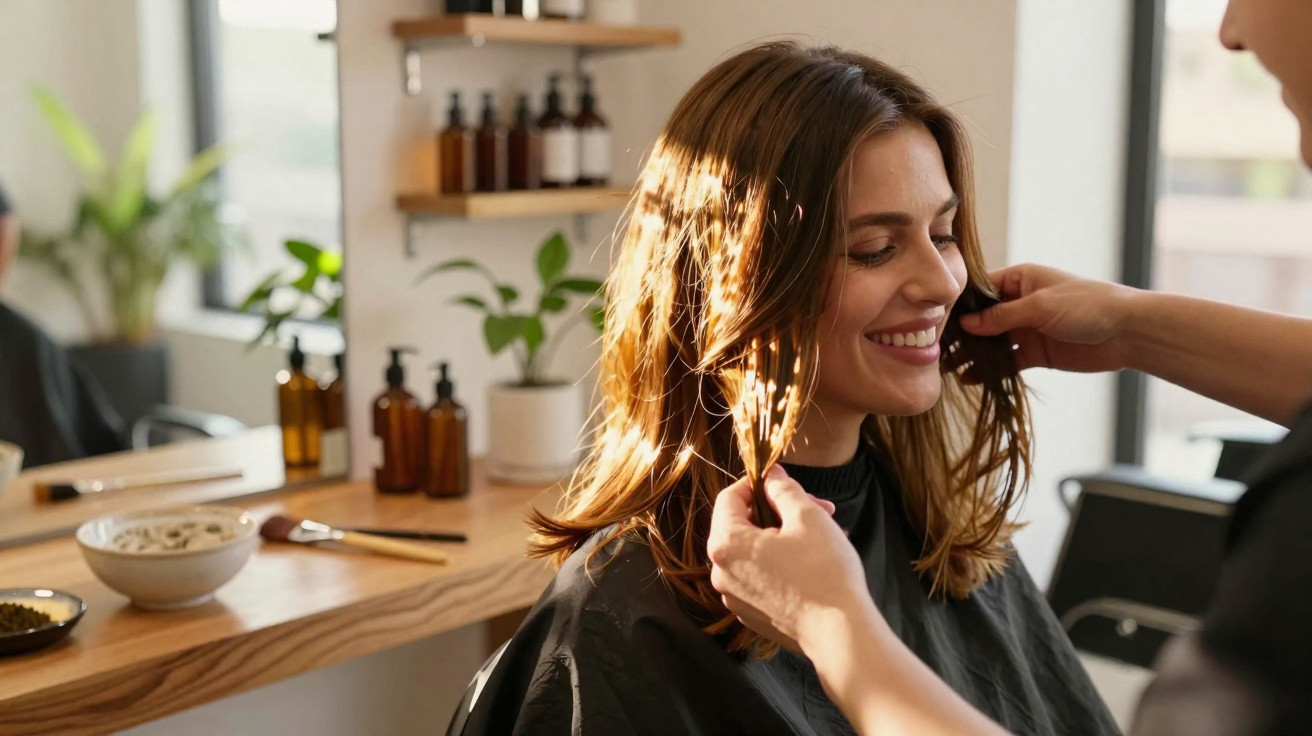
Not every set of highlights has to begin with heavy bleaching. Softer lightening methods can create honey, caramel and golden tones close to your natural shade, giving the hair more movement and depth. The key is less about lifting multiple levels and more about selecting a formula that suits your base colour and the current condition of the hair.
How does the technique brighten hair without traditional bleach?
The process may rely on gentle oxidative colour, pigments and low-contrast formulas placed only in targeted sections. Rather than removing large amounts of melanin, the stylist works with shades that sit near the natural colour, building the impression of brightness without harsh stripes or a dramatic change.
That said, it does not mean there is a true lightening process that is completely free from chemical reaction. A scientific review published in 2023 explains that procedures capable of changing colour within the fibre can also alter its structure. For that reason, the most accurate description is usually less aggressive, not entirely harmless.
What role do mineral clays play?
In professional formulas, clays can improve texture, grip and control during application. This consistency makes it easier to spread the product exactly where needed and to work freehand sections in open air with greater precision. In practice, clay is mainly part of the cosmetic base rather than the sole driver of lightening.
It is also important not to treat plant- or mineral-derived ingredients as automatically risk-free. The full formula, pH level, type of developer and processing time all affect the outcome. The FDA notes that colour additives sourced from plants or minerals are subject to safety considerations similar to other hair products.
Who do soft highlights work best for?
This approach suits anyone who wants added brightness while keeping their base colour. Brown hair can pick up touches of honey, copper or caramel, while lighter shades tend to take on golden and beige reflections. The result is usually more blended through the lengths, and regrowth at the roots tends to look understated.
- Natural hair typically gives a more predictable response.
- Brown bases pair well with honey, caramel and soft copper tones.
- Already sensitised hair needs assessment and a strand test before application.
- Changes of many levels usually call for a different lightening technique.
If you are aiming to turn very dark brown into very light blonde quickly, you may be disappointed because this method has clear limits. Results depend on your starting shade, any previous chemical services and how resilient the fibre is. The further the target tone is from the base, the more oxidation and intervention is generally required.
You can also watch the video shared by the YouTube channel Patricia Elias explaining how to use each type of clay for skin or hair.
How can you preserve shine after highlights?
Even a subtle change benefits from hydration, conditioning and protection from excessive heat. A gentle shampoo, a weekly mask and a heat protectant help reduce roughness and dullness. Swimming pools, strong sun and washing too often can also speed up fading and dryness.
A study published in 2024 looked at changes caused by repeated colouring cycles and found cumulative damage to hair morphology, composition and strength, especially with frequent repetition. This underlines that spacing out maintenance and keeping up regular care matter just as much as the technique you choose.
Is a softer change worth it?
When it is the right match, the technique can deliver a bright, polished look with easier upkeep. Before starting, the professional should check elasticity, porosity, chemical history and the desired colour goal. It is equally important to use properly regulated products and to follow the manufacturer’s instructions and warnings.
Do not decide purely based on the promise of “natural” or “damage-free”. Ask to see the formula, request a strand test and pay attention to how your hair responds. A careful decision now can prevent breakage, patchiness and regret later, while protecting what really matters: hair that is luminous, strong and well cared for.

Comments
No comments yet. Be the first to comment!
Leave a Comment