
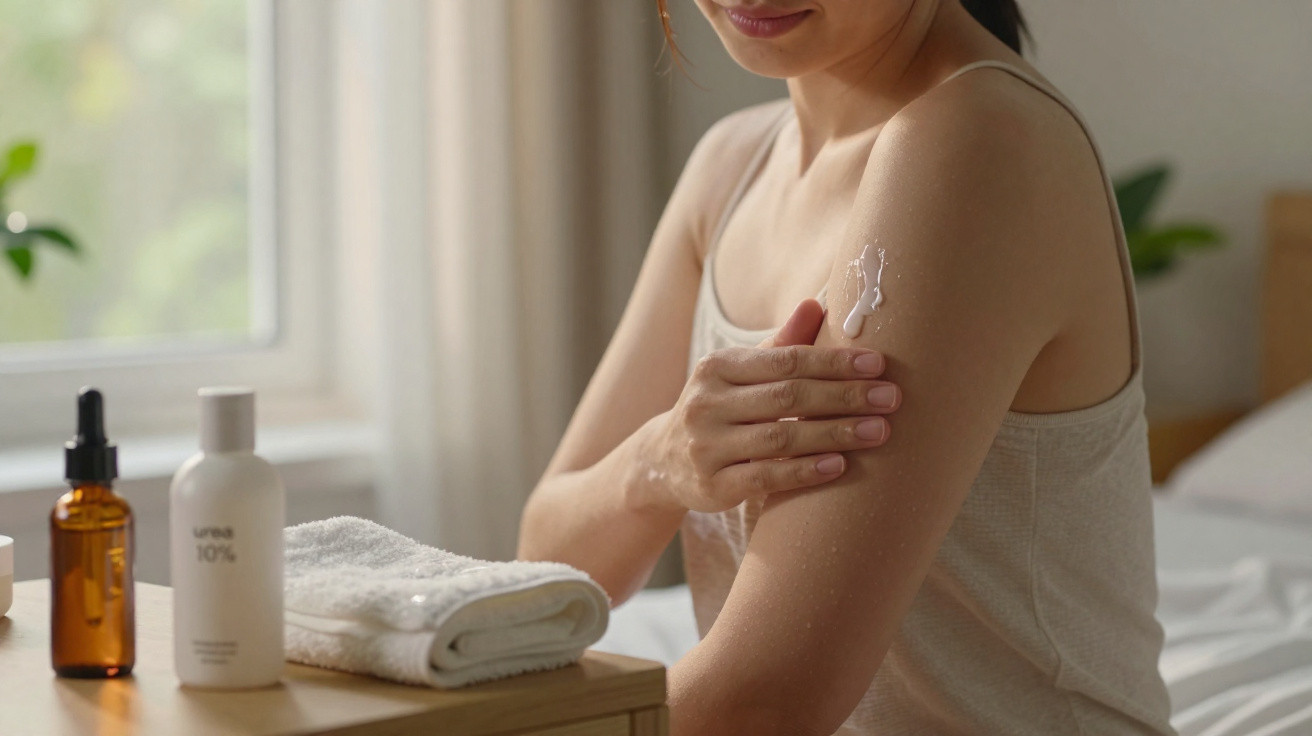
Running your hand over your upper arms and feeling a rough, “goosebumps-like” texture can linger even if you shower regularly and moisturise. Those tiny, sandpapery bumps are often a sign of keratosis pilaris - a very common, harmless condition that shows up mainly on the arms and thighs, and can be managed with a careful at-home routine.
Why do rough little bumps appear on the skin?
Keratosis pilaris develops when keratin - a protein that helps protect the skin - builds up. The surplus keratin forms small plugs that block the openings of hair follicles, leaving raised, dry, rough dots. They can look a bit like spots, but this isn’t acne and it usually isn’t painful.
The bumps may match your skin tone or appear redder or more brown, depending on your natural colouring and how irritated the area is. The texture is often more noticeable during cold, dry spells, when the skin barrier loses moisture more easily. Very hot showers and harsh cleansers can also make dryness worse.
Does keratosis pilaris have a permanent cure?
There isn’t a definitive cure because keratosis pilaris is linked to how the skin produces and sheds keratin, often with a genetic and family influence. In practice, that means some people are simply more prone to follicle plugging, even with good hygiene and body care habits.
Although it can stick around for years, it’s usually manageable with consistency. The right care can reduce roughness, boost hydration, and make the bumps less noticeable - but they may come back if you stop the routine. A realistic goal isn’t to remove a genetic tendency, but to keep the skin balanced.
How to care for keratosis pilaris at home
An effective routine combines gentle cleansing, gradual renewal, and moisturising. Scrubbing hard can trigger inflammation and make redness worse, so exfoliation needs to be gentle and spaced out. The habits below can help smooth the texture without causing further irritation:
- Choose a mild body wash and avoid very hot water.
- Exfoliate lightly once or twice a week.
- Apply moisturiser straight after bathing, while the skin is still slightly damp.
- Don’t squeeze, scratch, or try to shave off the bumps.
- Use products regularly for several weeks before judging results.
Physical scrubs with large grains, stiff loofahs, and rough brushes are best avoided or used very cautiously. Too much friction can cause tiny injuries and lead to dark marks. In many cases, moisturisers with gentle resurfacing ingredients provide more even results than trying to remove bumps manually.
See the video shared by the YouTube channel Dr Marina Hayashida, discussing keratosis pilaris and how to treat it.
Do urea or lactic acid help with texture?
Moisturisers containing urea can help the skin hold onto water and soften excess keratin, making the surface feel smoother. Lactic acid both hydrates and supports mild exfoliation of built-up cells. Strengths vary between products, so it’s sensible to start slowly and follow the label directions.
You may be able to apply the product once or twice daily, depending on how your skin tolerates it. Strong stinging, heavy peeling, or persistent redness are signs to stop. It’s also important to use sunscreen on any exposed areas, especially when using ingredients that encourage skin renewal.
When is it time to see a dermatologist?
Seek professional advice if the bumps become very itchy, painful, start to ooze, or change rapidly in appearance. Other conditions can look similar, and only a specialist can confirm the diagnosis. An appointment is also a good idea if a consistent at-home routine hasn’t improved things after a few weeks.
The biggest shift happens when force is replaced with regularity. Stick to gentle care, watch how your skin responds, and don’t expect to undo years of roughness in a few days. Start a simple, consistent routine today - putting it off keeps the discomfort going, while small habits can improve both texture and confidence.

Comments
No comments yet. Be the first to comment!
Leave a Comment