
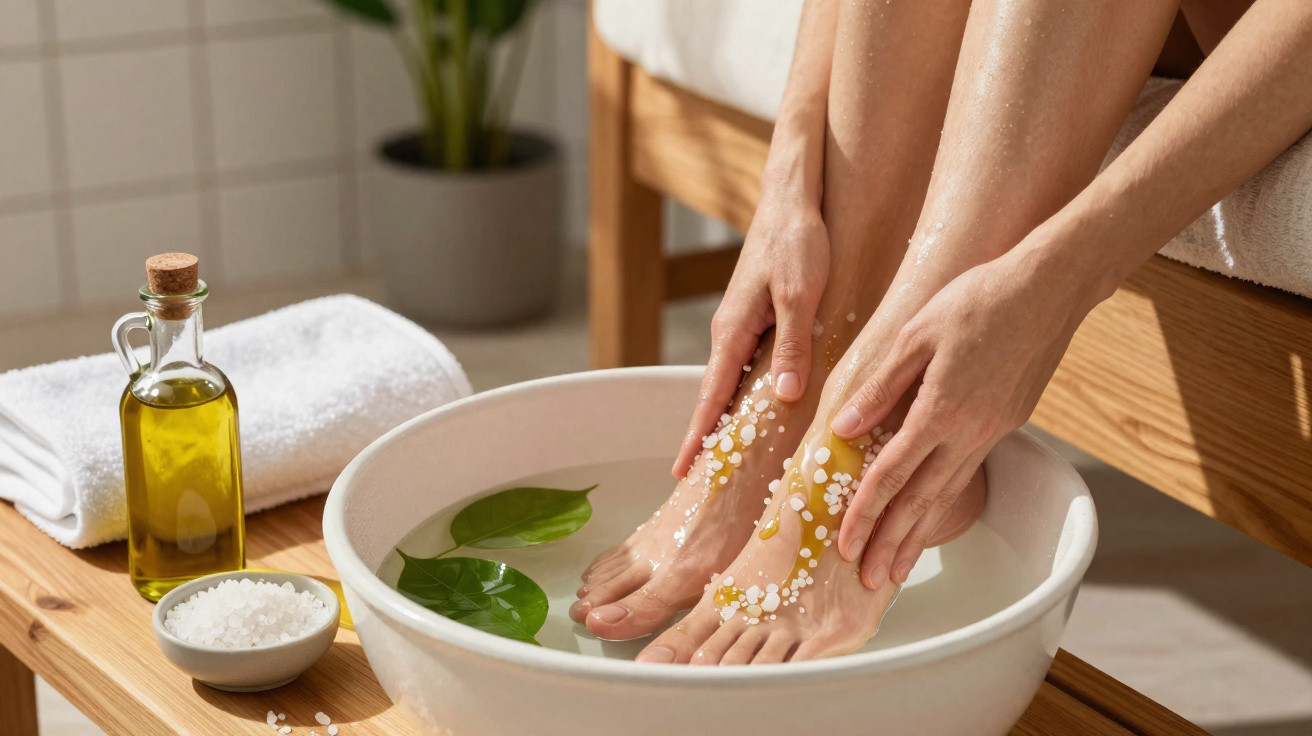
Washing your feet with salt and olive oil is a home routine people use to soften rough patches, lift surface build-up and lessen the look of dry heels. A warm foot soak can feel relaxing, and olive oil leaves an oily film on the skin. However, this approach is purely cosmetic and does not replace treatment for deep cracks, infections or ongoing pain.
What is the salt and olive oil mixture for on the feet?
Salt dissolved in warm water can help loosen dirt and dead skin sitting on the surface. When rubbed in gently, it also acts as a physical exfoliant, which may smooth mild calluses and slightly hardened areas on the sole and heel. Scrubbing too hard, though, can irritate the skin and lead to small abrasions.
Olive oil should be used only after washing and drying. Its fatty acids create an emollient layer that temporarily reduces the feeling of roughness. Purpose-made foot creams or ointments-particularly those containing urea-are usually better suited to addressing severe dryness and cracked heels.
How to do a foot soak without damaging the skin
The water should be warm, never very hot, and the soaking time needs to be kept short so the skin does not become overly softened. You can do it like this:
- Pour warm water into a clean bowl or basin.
- Add 1–2 tablespoons of coarse or sea salt.
- Soak your feet for around 10 minutes.
- Rinse to remove salt grains and residue.
- Dry carefully, especially between the toes.
- Apply a few drops of olive oil to the soles and heels.
- Massage until the excess greasiness reduces.
What benefits might you notice after applying it?
On otherwise healthy feet, the combination may leave the surface feeling softer and give a sense of relief after long periods of standing. Warm water can also help the muscles relax, while the massage may improve local comfort. These effects are short-lived and do not amount to proven circulation improvement or a treatment for swelling or pain.
Heel moisturising tends to work better when an emollient is applied straight after washing, while the skin is still slightly damp. Olive oil can serve that purpose occasionally, but it should not be applied heavily between the toes-an area that needs to stay dry to avoid prolonged dampness.
Who should avoid this home care?
A salt soak should not be used on broken skin, as it can sting and worsen irritation. People with diabetes, reduced sensation, circulation problems or a history of foot wounds should seek professional advice before soaking their feet.
- Open wounds, cuts or cracks that are bleeding.
- Blisters, burns or severe irritation.
- Itching, flaking or suspected fungal infection.
- Redness, warmth, discharge or persistent swelling.
- Diabetes, neuropathy or poor circulation.
- Allergy or sensitivity to the ingredients used.
How often can the routine be repeated?
If the skin is intact, doing the procedure once a week is usually enough for cosmetic care. Stop if stinging, redness or worsening dryness appears, as long soaks and frequent salt use can strip some of the skin’s natural protective barrier.
Salt and olive oil on the feet work best as an add-on to a routine that includes daily washing, drying between the toes, breathable footwear and targeted moisturising focused on the heels. Painful cracks, nail changes, persistent odour or wounds that do not heal call for proper assessment rather than repeated home applications.






Comments
No comments yet. Be the first to comment!
Leave a Comment