
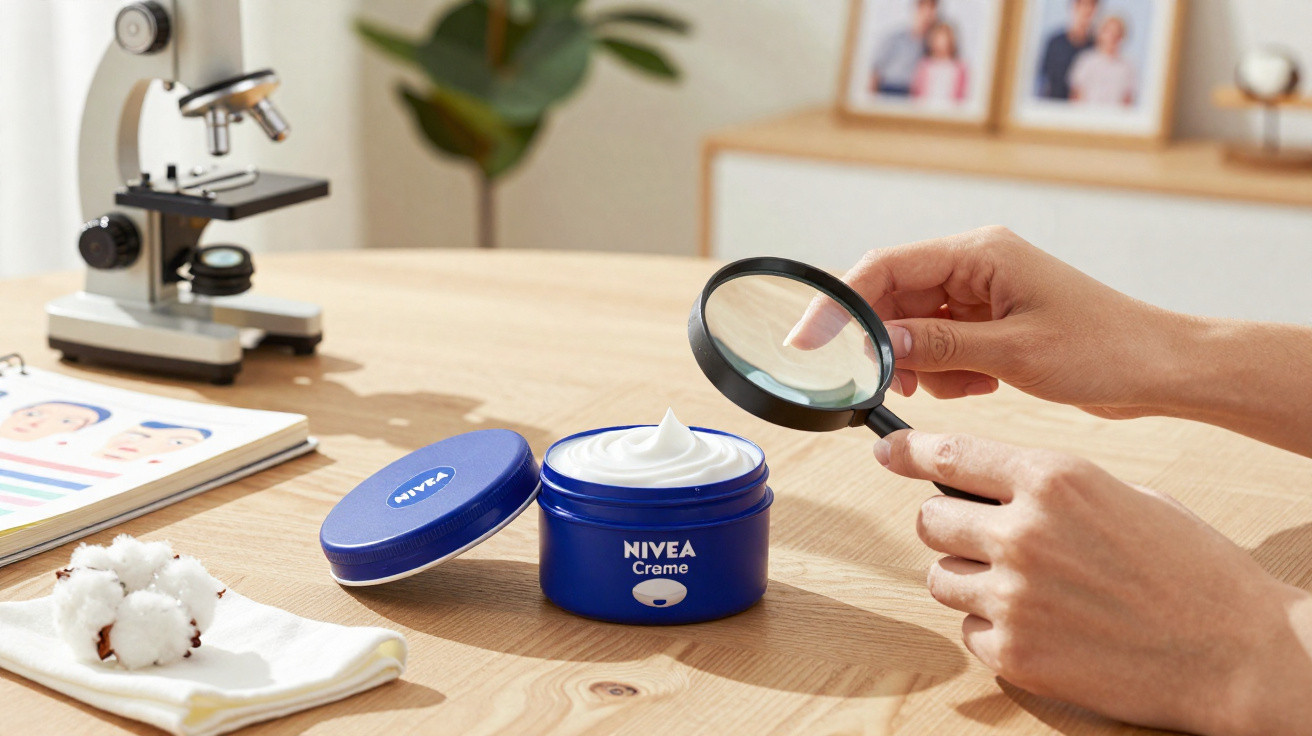
On bathroom shelves up and down the country, there’s often the same small blue tin - a staple that gets handed down through families with very little scrutiny.
After a new set of laboratory checks pushed this long-time favourite back into public view, plenty of people have started asking what it is they’ve actually been rubbing into their skin for years.
The new tests that put a century-old cream back in the news
Spain’s main consumer organisation, OCU, recently put classic Nivea Creme under a fairly forensic spotlight. They assessed how well it hydrates, examined the make-up of the formula, and weighed the brand’s claims against what happens on real, living skin. For a product that might share a shelf with premium serums and fashionable Korean gels, the findings come across as notably down-to-earth.
Simple protocol, measurable hydration boost
In the OCU trial, volunteers applied Nivea Creme twice daily to the forearm over a two-week period. After 15 days, measuring devices showed a definite increase in skin hydration. Participants also described reduced tightness, less roughness and a more comfortable skin feel. In other words, it still delivers on the straightforward promise it has always made: it helps curb water loss and smooths dry areas.
Nivea’s iconic blue tin behaves less like a miracle lotion and more like a sturdy moisture shield for thirsty skin.
That may sound unglamorous in a world packed with loud anti-ageing claims, yet dermatologists often prize precisely this kind of outcome. Better hydration generally supports the skin barrier, which tends to mean less flaking, fewer tiny fissures and reduced irritation from cold weather, soap and rubbing.
The surprising power of a familiar smell
One point the testers couldn’t overlook had nothing to do with instruments or readings: the fragrance. Many people immediately associated the smell with childhood, grandparents, or shared family bathrooms. This kind of “olfactory memory” helps explain why some users return to it even after sampling newer, more “advanced” moisturisers.
Companies spend heavily trying to build those emotional associations. Here, Nivea’s largely unchanged scent has simply become part of the routine - offering continuity and reassurance that more clinical, fragrance-free products don’t necessarily provide.
A thick texture that works best when used strategically
Nivea Creme doesn’t pretend to be light. It’s dense, takes a little effort to spread, leaves a noticeable film and feels rich once applied. On very dry or rough zones - hands, elbows, shins and heels - that heaviness can be an advantage, sealing in moisture and helping protect against wind, frequent washing and central heating.
Applied everywhere from head to toe, however, it can feel overly weighty. Many people consider it too greasy as a daytime facial moisturiser, particularly with normal, combination or oily skin. Dermatologists often recommend using it more selectively:
- Use pea-sized amounts rather than scooping out large blobs.
- Put it on mainly at night, when shine is less of a concern.
- Concentrate on tight, flaky or high-friction areas rather than covering whole limbs.
This “spot treatment” approach makes it possible to take advantage of its strong occlusive performance without ending up with skin that feels slick.
What is really inside the blue tin?
A short, conservative formula that favours barrier repair
OCU’s chemistry team pointed out that the ingredient list is relatively pared back compared with many modern moisturisers. The foundation is largely mineral oils and waxes - traditional occlusives that sit on top of skin and slow transepidermal water loss. These are paired with emulsifiers to keep the mixture stable, plus a small fragrance blend.
The cream skips several controversial preservatives such as parabens, EDTA and BHT, which often spark hot debates in beauty forums.
That doesn’t make it “natural” in the strictest sense. It relies on petroleum-derived ingredients that dermatology has used for decades because they’re inexpensive, stable and not especially prone to oxidation. For most people, that results in dependable moisturising and a low likelihood of irritation.
Fragrance allergens: a quiet red flag for reactive skin
The comforting scent comes with a technical downside. The perfume blend includes regulated fragrance allergens such as limonene, geraniol and citronellol. These compounds are common across scented cosmetics and even cleaning products. Most users won’t notice any issue, but a small group with very sensitive or allergy-prone skin may develop redness, itching or small bumps.
| Component | Role in the cream | Potential issue |
|---|---|---|
| Mineral oils & waxes | Form a protective film, reduce water loss | May feel heavy on oily or acne-prone skin |
| Emulsifiers | Bind water and oil, keep texture stable | Sometimes sting on very damaged skin |
| Fragrance allergens | Give the characteristic Nivea scent | Risk of reaction in perfume allergies |
If you already know you react to fragrance, it’s sensible to patch test on the inner arm for several days before using it more widely. People being treated for conditions such as eczema or rosacea often do better with fragrance-free options recommended or approved by a dermatologist.
A “multi-tool” cream that fits many everyday roles
A major reason Nivea Creme still shifts tens of millions of tins every year is its flexibility. In many homes it acts like a Swiss Army knife for skincare:
- A back-up hand cream after hot water or strong detergents.
- A softening balm for cracked heels or coarse elbows.
- A soothing layer after shaving legs or underarms.
- A protective “wind shield” on cheeks and nose before a winter walk.
On facial skin, its strong occlusive effect can be useful in freezing conditions or for short, “slugging-style” nighttime routines, where it locks moisture in over a lighter hydrating serum. For acne-prone skin, though, that same barrier can congest pores, which is why many dermatologists direct those patients towards lighter, non-comedogenic lotions instead.
How a 1911 cream became a cross-generational myth
Consistency over a century of marketing noise
Since it launched in 1911, Nivea Creme’s central proposition has barely shifted: nourish dry skin, protect against the elements, and remain within reach of everyday households. The packaging has been tweaked and the formula adjusted to meet modern rules, but the essential character has stayed recognisable.
In a sector where products are endlessly reintroduced with fresh buzzwords, that steady continuity is striking. Across Europe, Latin America and Asia, the blue pot is instantly identifiable. The company is reportedly moving more than 100 million units a year - a scale very few moisturisers ever reach.
Price, perception and the “good enough” factor
Its popularity is also closely tied to cost. In many European countries, a mid-sized tin is only a few euros, and even the larger family versions usually stay below the psychological threshold that pushes shoppers into “luxury” spending. That places Nivea as a “good enough” daily basic: not glamorous, not cutting-edge, but dependable and affordable.
Where boutique brands chase prestige, Nivea wins by feeling ordinary, functional and always around.
That balance matters when many people are trimming discretionary spending but still want a measure of self-care. A low-cost tub that lasts for months and helps soothe dish-washed hands can feel like a small, controllable comfort.
The blue tin as cultural object
The container itself is worth noting. The flat, deep-blue tin with white lettering has become an icon in its own right. It shows up as easily in vintage adverts as it does in family bathrooms and social-media “shelfies”. From a branding perspective, it’s invaluable: the packaging functions almost like a three-dimensional logo.
Paired with the familiar scent and tactile feel, that look turns the cream into more than a formula. It becomes a modest emblem of everyday care at home. For many buyers, that emotional association weighs just as much as any ingredient list when deciding what to repurchase.
Who should actually use classic Nivea cream in 2025?
Skin types that benefit most - and those that should rethink
Taking the independent testing and standard dermatological understanding together, the classic blue-tin Nivea tends to suit:
- Dry to very dry body skin that needs a physical barrier.
- People who spend lots of time outdoors in cold, windy or dry weather.
- Homes that want a shared all-rounder for hands and rough patches.
It’s less suitable for:
- Oily or acne-prone facial skin, especially in hot climates.
- Anyone with a diagnosed fragrance allergy or strong intolerance to perfume.
- People looking for advanced anti-ageing ingredients, such as retinoids or peptides, within the same product.
For many, a mixed set-up is the most practical: a lighter, fragrance-free moisturiser for the face and larger body areas, with a tin of Nivea Creme kept for rough spots and winter “emergencies”.
What this case says about skincare myths in general
The revived interest in Nivea points to something wider about how people pick cosmetics. Skincare marketing is often framed as an innovation race - new actives, novel textures, clinical language. Yet one of the world’s most enduring products has built its status through repetition and familiarity rather than constant reinvention.
That doesn’t mean older automatically equals better. Some legacy formulas lean heavily on fragrance or occlusives that won’t match modern preferences or certain skin conditions. Still, the Nivea example shows how a basic, generally well-tolerated formula can outlast trends and still meet contemporary hydration checks.
For anyone who feels lost in packed skincare aisles, it offers a useful way to think: first, does your skin mainly need water, oil, or both? Second, how much perfume can you personally tolerate? Third, what texture will you actually apply consistently? Putting a heritage product like Nivea alongside those answers makes it easier to see whether it belongs as a staple, a back-up, or something you’d rather avoid.




Comments
No comments yet. Be the first to comment!
Leave a Comment