
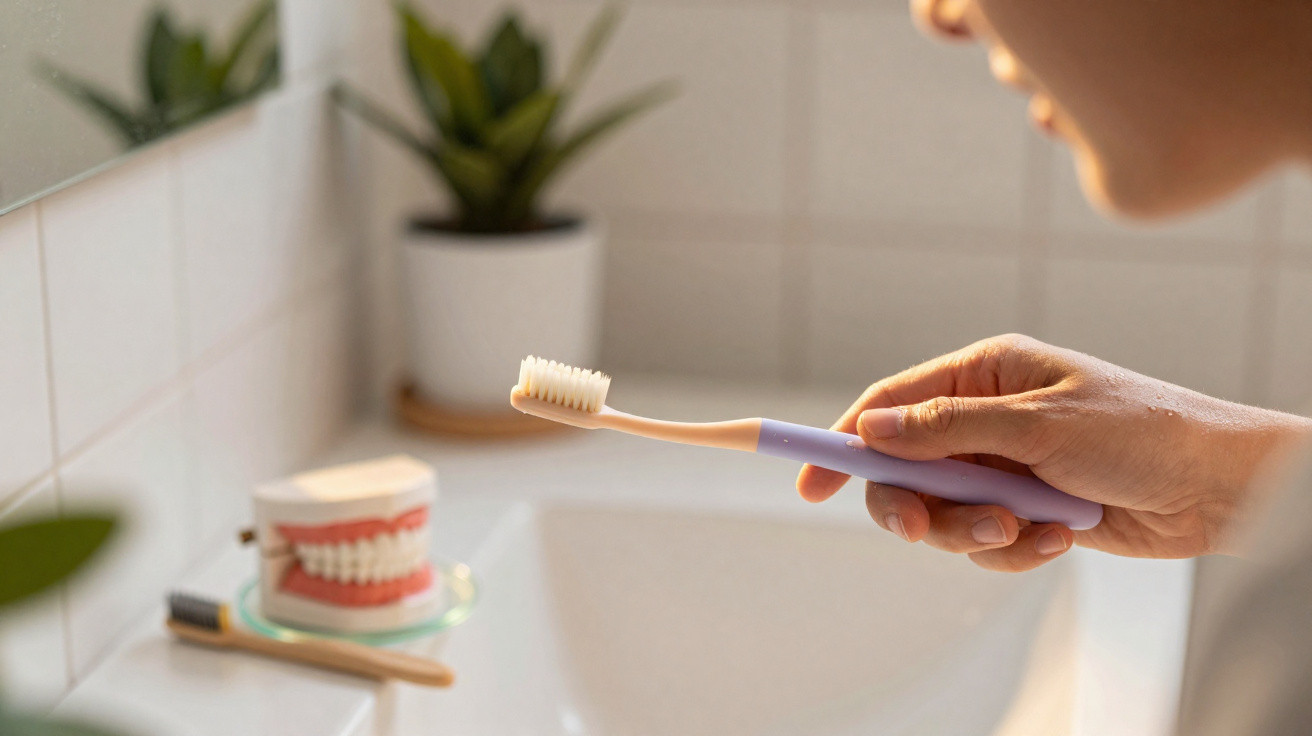
Recent research suggests silicone toothbrushes can shift plaque effectively while lowering the scraping risk often associated with firmer bristles.
That result reframes an often-overlooked bathroom item as a credible option for cleaner teeth, kinder brushing, reduced waste, and more difficult decisions for global health.
A quieter contender
A review spanning ten English-language studies gave silicone brushes a more defined role than their low profile in oral care might imply.
Aoife Cummins at McMaster University argued that this soft-bristled alternative warrants much more rigorous evaluation.
Although the evidence base is limited, the message was consistent: silicone bristles may disrupt stubborn plaque without bearing down as aggressively on delicate gums.
The challenge now is less about the idea and more about access-whether an improved brush can realistically reach those who would benefit most.
Oral diseases affect billions
A World Health Organization (WHO) report from the United Nations health agency estimates that oral diseases affect roughly 3.5 billion people globally.
Tooth decay and gum disease take hold when sticky plaque fuels harmful bacteria in the mouth, which then produce acids and trigger inflammation in sensitive tissue.
Brushing regularly breaks up that film, but nylon bristles-the common plastic fibres found on many brushes-can bend, splay, and abrade when users apply too much pressure.
Dental advice typically recommends replacing toothbrushes every three to four months, which can turn availability and cost into yet another obstacle.
What silicone changes
Compared with more rigid fibres, silicone-a flexible, man-made rubber-tends to flex along the gum line rather than cutting into it.
This matters because good brushing should disturb bacteria on teeth, not harm the living tissue that supports them.
Within the review, multiple papers associated silicone bristles with a reduced risk of gum injury or wear to teeth.
However, softness alone is not a guarantee of better cleaning, as bristles that are too short or poorly formed may fail to reach the surfaces they need to clean.
Success in the lab
One unexpected factor was shape: in a single test, a mouth swab (a soft oral-cleaning tool) performed better than a shorter silicone design.
Because it had a longer head and threaded bristles, it contacted more of the surface and lifted artificial plaque more readily.
In that experiment, both wet and dry brushing were effective, which could be important in settings where clean water is not always available.
Even so, laboratory performance does not automatically translate to everyday use, where technique, routine, toothpaste, and persistence determine whether a tool truly helps.
Who could benefit
A brush that tolerates heavy-handed use may be most valuable for children, older adults, and people with limited hand control.
With flexible bristles, pressure can be distributed across the gums rather than concentrated at sharp contact points, potentially lowering injury risk.
For people with sensitive mouths, that softer contact may make cleaning feel less intimidating-and therefore easier to repeat.
Yet one study in the review found that children with blindness reported greater anxiety with an electric silicone brush, largely because the noise and controls felt unfamiliar.
Culture often shapes adoption
Even a toothbrush that performs well in tests can fall short if it does not fit the ways people already clean their mouths.
In parts of rural India, some people rely on fingers, water, powders, or plant materials rather than a handled brush.
Silicone finger brushes-small cleaners worn over a finger-could align directly with that practice while still helping to remove plaque.
Acceptability is crucial, as stigma, noise, grip strength, and established local routines can stop a product long before it has a chance to tackle plaque.
Waste changes the stakes
The review highlighted a second issue: in the United States alone, around one billion toothbrushes are thrown away each year.
One life cycle assessment evaluated six manual toothbrushes across 18 impact categories.
Models using silicone bristles with plastic handles outperformed nylon-bristle brushes in every category, with an average impact that was 14% lower.
Retaining a handle reduced emissions by about 4.5 g (0.16 ounces) of climate-warming pollution per brush, although durability needs to be sufficient for that saving to matter.
A lack of evidence
Despite encouraging early signals, the argument for switching is still weaker than the range of products on shop shelves might suggest.
The studies included in the review differed widely, covering human trials, laboratory experiments, and a single animal study involving dogs.
There was no formal assessment that ranked study quality, meaning weaker evidence may sit alongside more robust work.
As a result, consumers should view silicone toothbrushes as promising options rather than proven stand-ins for every person.
Future research directions
Dentists need evidence that goes beyond whether a new brush can clean during a brief, controlled test.
Future clinical trials-studies conducted with people-should monitor plaque levels, gum irritation, breakage, price, comfort, and whether users continue brushing consistently over months.
Design-focused research should also involve children, carers, older adults, disabled people, and communities where handled brushes are not the norm.
Stronger data could clarify where silicone fits best, where nylon remains superior, and where an entirely different tool is the right choice.
Silicone toothbrushes sit in a distinctive position: they may clean effectively, reduce gum injury, and create less waste.
What is needed next is not a rushed changeover, but careful testing that takes mouths, budgets, culture, and the planet seriously.


Comments
No comments yet. Be the first to comment!
Leave a Comment