
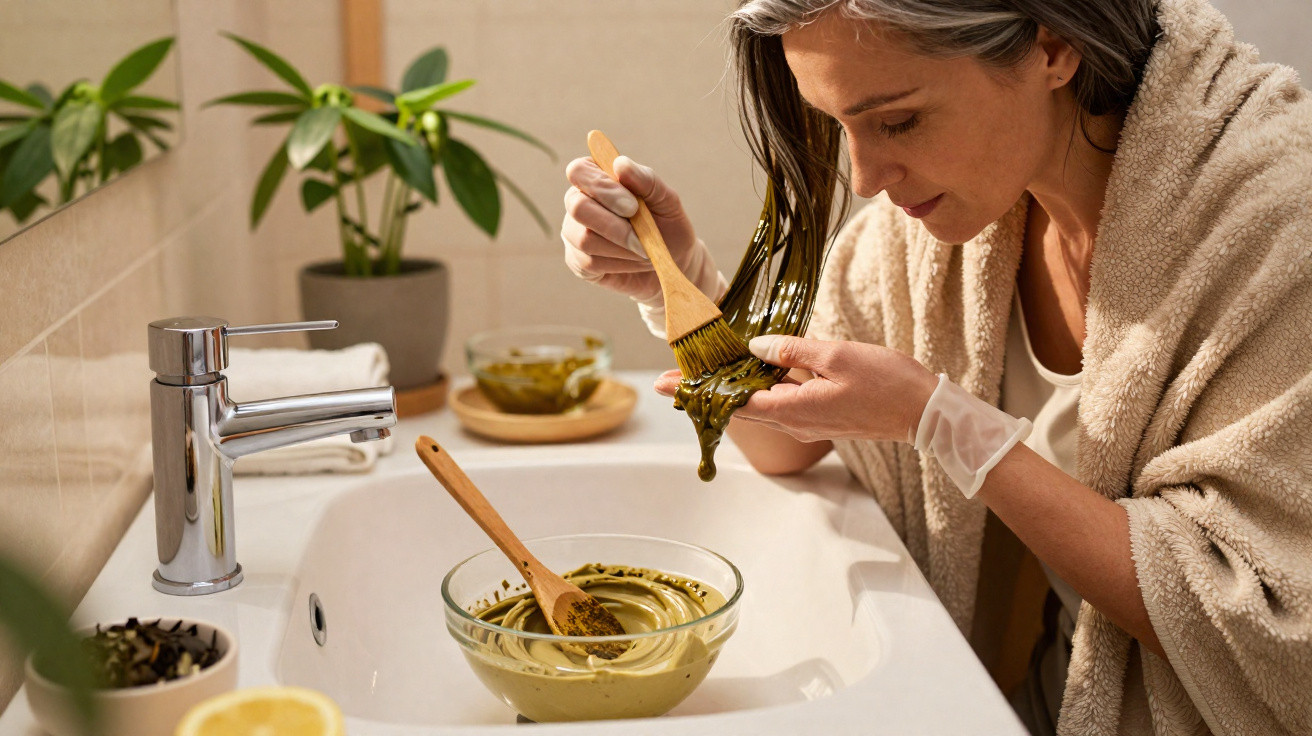
The homemade blend most often mentioned for covering grey hair in a single day is made with pure henna, a plant powder derived from Lawsonia inermis. It will not remove grey hairs permanently because it cannot restore lost melanin. Instead, it lays pigment onto the hair fibre, creating noticeable coverage from the first application. The end result varies according to the henna’s quality, how long the paste is left to rest, and your natural hair shade.
Why does henna cover grey hair?
Henna releases a natural pigment called lawsone. This pigment binds to the hair’s keratin and forms a coloured layer on the surface. On grey hair, the effect tends to look stronger because a fibre with no melanin shows the deposited pigment more clearly.
Unlike dyes that use ammonia and an oxidiser, henna does not lighten the hair or alter the inner colour of the strand. It works as a deposit-only tint, which is why it often gives coppery, reddish, or brown tones-especially when mixed with other plant powders.
What goes into the homemade mixture?
The safest starting point is pure henna only, with no metallic salts, synthetic colourants, or unknown blends. Products marketed as “black henna” need extra caution, because they may include irritating additives or pigments that do not come from the original plant.
A straightforward mix usually includes just a few things:
- Pure henna powder, sifted and from a reliable source.
- Warm water, enough to make a creamy paste.
- A few drops of lemon juice or apple cider vinegar to help release the pigment.
- A glass or plastic bowl, never metal.
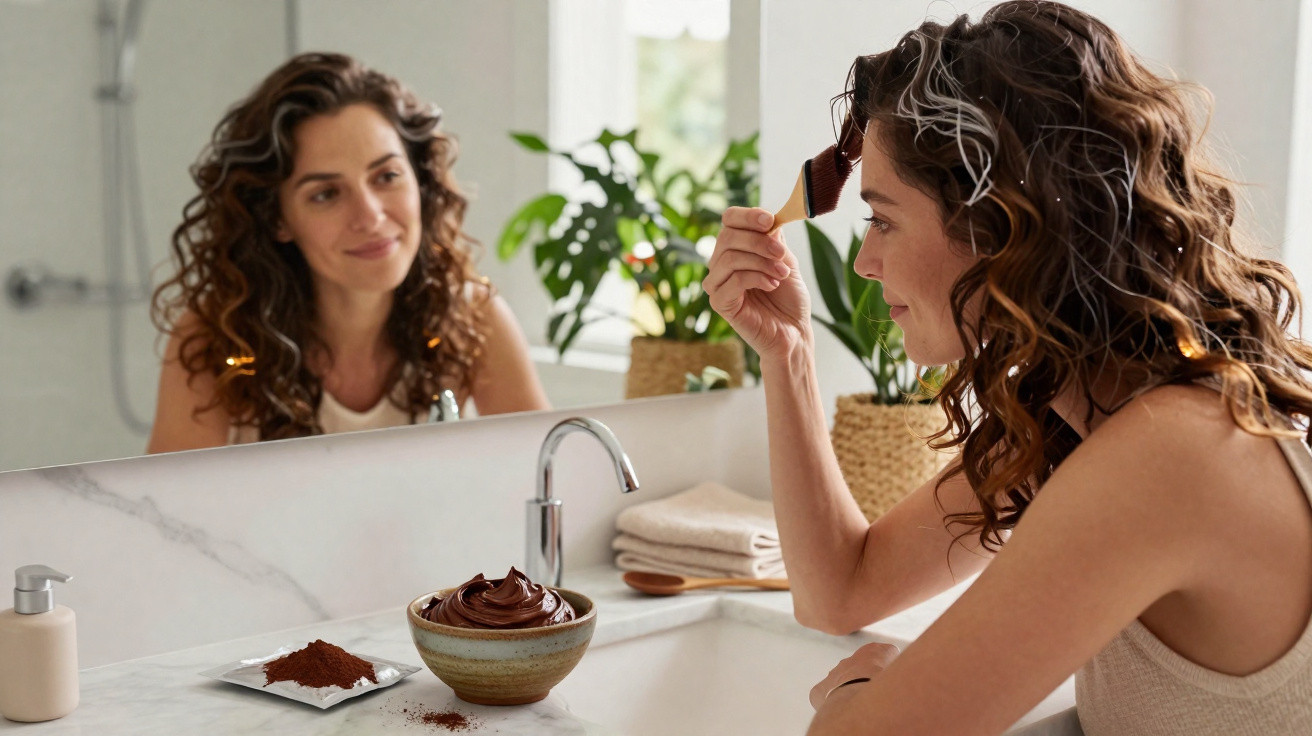
- Gloves, an application brush, and a dark towel to prevent staining.
How to prepare it to cover grey hair on the same day?
Combine the henna with warm water until it reaches a consistency similar to thick yoghurt. Then cover the bowl and leave the paste to rest for a few hours, as this waiting time helps the pigment develop before you apply it.
If you want to cover grey hair on the same day, you can mix the paste in the morning and apply it in the late afternoon. Applying henna immediately after mixing usually produces weaker colour, less even coverage, and shorter-lasting results on grey strands.
How to apply it without staining skin and clothes?
Apply to clean hair that is dry or slightly damp, separating it into thin sections. The grey roots need a generous amount of paste, because henna works through direct contact with the hair fibre.
To reduce staining and patchiness, follow this order:
- Smooth oil or cream around the forehead, ears, and nape.
- Wear gloves throughout mixing and application.
- Start with the areas that have the most grey hair.
- Cover the hair with a plastic cap to keep in moisture.
- Leave it on for the time stated by the manufacturer, then rinse thoroughly.
What to expect on grey strands?
Henna can cover grey hair with shine and a fuller-looking finish, but the final shade will not be identical on everyone. On very light strands, the tone often looks more orange or copper; on brown bases, the effect is usually subtler and warmer.
The most important point is not to treat henna as a permanent miracle solution. It tints, improves the look of the fibre, and softens the contrast of grey hairs, but your roots will continue to grow in grey. To keep coverage, you will need to reapply at the roots and do a strand test whenever you change the brand, the mix, or the resting time.
Comments
No comments yet. Be the first to comment!
Leave a Comment