
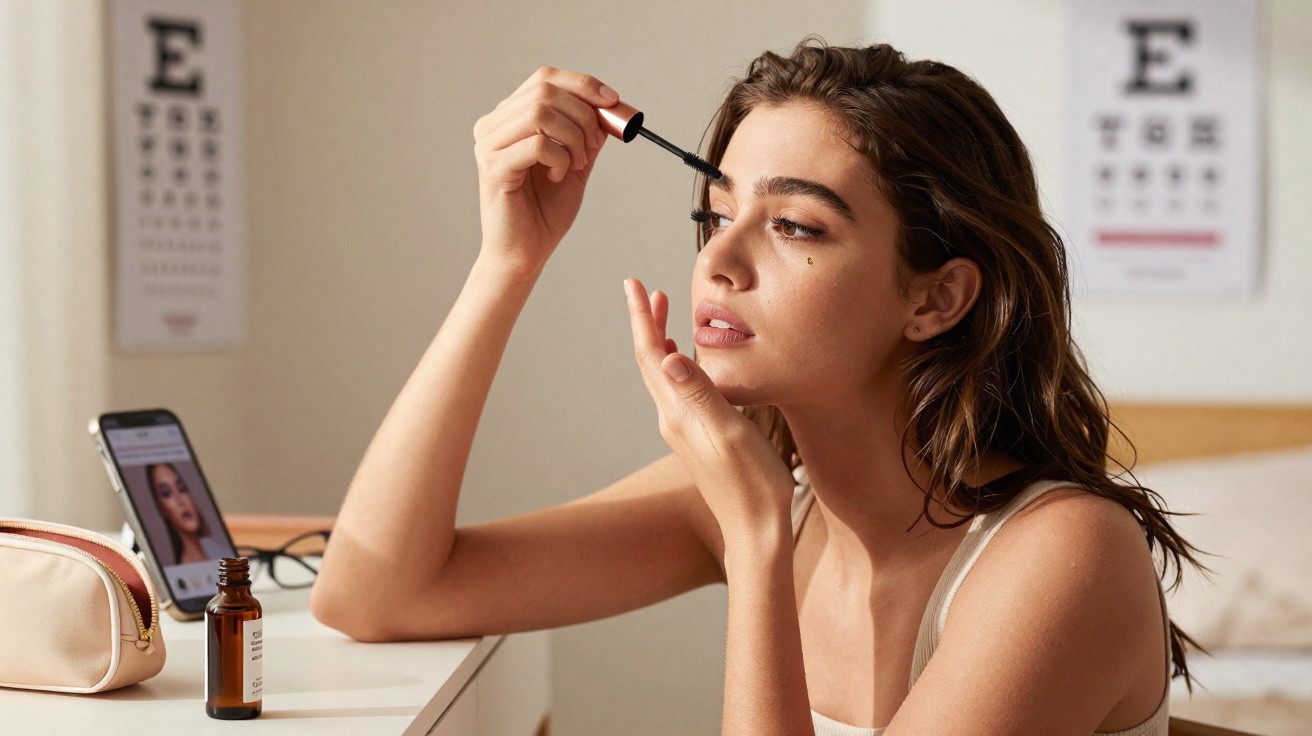
A mascara that’s gone a bit dry, an eyelash curler used with too much gusto… and suddenly your lashes look thinner and more brittle. On TikTok and Instagram, the supposed miracle fix is repeated like a mantra: one drop of castor oil every night, and you’ll get lashes that look like natural extensions. The at-home ritual has made its way into bathroom routines, sometimes even among teenagers. Before-and-after clips rack up millions of views, and little bottles of oil fly off pharmacy shelves. While influencers insist it’s “100 % safe”, ophthalmologists are raising concerns. Two worlds looking at each other - but rarely having the same conversation.
Between promises of doll-like lashes and the reality of urgent eye appointments, an uncomfortable question hangs in the air: how far is it worth pushing your eyes for a few extra millimetres?
Why castor oil lashes went viral – and what we’re not seeing on camera
In most lash-growth videos, the hook isn’t the product - it’s the closeness. A young woman in an oversized hoodie, hair tied up, camera pushed in, filming herself over the sink. She dips a cotton bud into a small bottle of golden oil, draws a line along her lashes, then looks up at the lens as if to say: “You can trust me.” It feels like you’re in her bathroom, sharing a friend-to-friend secret.
That sense of intimacy does a lot of the persuading. Castor oil starts to feel less like a calculated cosmetic choice and more like a comforting little ritual - the sort of homemade remedy a grandmother might have sworn by. The catch is that the camera captures the sheen, not the messy bits. You don’t see the evenings of stinging, the rushed appointments, or vision that slowly turns hazy. Social media is brilliant at the leap from “before” to “after”. It hardly ever stays with the “during”.
In 2024, the hashtag #castoroillashes has clocked up millions of views across TikTok and Instagram. Some creators claim they’ve doubled their lash length in a month. One 22-year-old student I spoke to in London told me she tried castor oil after a lash extension disaster. She’d lost whole patches of lashes and felt exposed without mascara. After three weeks of nightly use, she thought her lashes looked thicker. She also said she woke up more than once with crusted, irritated eyes. Her GP later told her she had mild blepharitis - inflammation of the eyelids - which can be associated with oils and residue trapped along the lash line.
Clinicians see the other side of the trend. Ophthalmologists across Europe and North America describe a quiet uptick in patients putting plant oils at the lash line, with some turning up with redness, allergic reactions, or blocked meibomian glands. These glands produce the oily component of your tears. When they clog, the tear film becomes unstable and dry eye or persistent irritation can follow. Castor oil itself isn’t automatically the villain: it appears in certain eye and skincare products, but in controlled, filtered and precisely dosed forms. The problem isn’t that castor oil exists - it’s where people apply it, how much they use, and how little they understand the risks.
How to stay safe if you’re still tempted by castor oil for lashes
If you’re set on trying castor oil, treat it for what it is: an external substance being used extremely close to one of the most sensitive surfaces in your body. The least risky option is cold-pressed, hexane-free castor oil, ideally bought from a pharmacy or a reputable brand that clearly states it’s for cosmetic use. Don’t decant it from a random kitchen bottle. Tip a tiny amount into a clean dish rather than dipping directly into the main container. One very thin film along the upper lash line is already enough. If your lashes look wet and glossy, you’ve almost certainly applied far too much.
Before the oil goes anywhere near your eyes, do a patch test on a small area of skin - behind your ear or along the side of your neck - and wait 24 to 48 hours. It’s tedious, and let’s be honest: most people don’t consistently do it. But if your skin reacts away from your eyes, imagine what it could do at the eyelid margin. If you continue, apply it at night only, once makeup is fully removed and your face is clean. Keep it at the lash roots and away from the waterline. If your vision becomes blurry after application, that suggests the oil is reaching the surface of the eye rather than sitting harmlessly on the lashes.
A common misconception is that irritation is “evidence it’s working”. A bit of redness or tingling gets re-framed as my follicles are waking up. In reality, that discomfort can point to an emerging allergy or a disrupted tear film. Ophthalmologists warn that repeated contact with any non-sterile oil along the lash line can alter how your eyelids work and how tears spread. Some people end up with ongoing dry eye - the gritty, sand-in-your-eyes feeling that can last all day. Unlike a broken nail, it’s not something you simply forget about after a week. A heavy layer of oil can also trap dust, makeup particles and bacteria, increasing the likelihood of eyelid inflammation.
“Your desire for thicker lashes is valid,” says Dr Emma Collins, an ophthalmologist in Manchester. “But you have to ask yourself one blunt question: am I willing to trade comfortable, clear vision for a bit more density at the lash line? Your eyes are not an area where trial-and-error beauty hacks are harmless.”
If you’re looking for a more cautious approach, these are the practical swaps and habits experts tend to support:
- Choose a mascara with conditioning ingredients, and remove it gently using a water-based remover.
- If you want a growth product, look at clinically tested lash serums with published safety data rather than cupboard oils.
- Give your lashes regular “off days” without mascara or heat tools to limit breakage.
Balancing beauty trends with eye health: finding your own line
Most trends don’t feel risky while you’re caught up in them. Castor oil on lashes now has echoes of DIY hair bleach in the 2000s: everyone had a story, most people were fine, and a few were left with lasting damage. The difference is the body part involved. Sparse lashes are annoying. Eyes that sting whenever you step outside in the wind can change how you live day to day. The appeal of this trend is how effortless it seems: an inexpensive bottle, a nightly swipe, and the promise of waking up looking better. No clinic, no prescription, no waiting room.
There’s another layer we don’t talk about much. Thick, fluttery lashes have quietly become a beauty baseline - especially for women who appear on camera all the time. Work Zooms, dating apps, Instagram Stories: your eyes are constantly being looked at. Castor oil “shortcuts” can feel like a way to keep up without admitting you’re chasing a standard at all. Posting the routine can make it sound empowering. Yet plenty of regular users admit, off-camera, that they’re also scared to stop - convinced their “real” lashes don’t measure up. That emotional attachment rarely makes it into polished tutorials.
Perhaps the real question isn’t whether castor oil is completely harmful or totally safe. It’s whether you’re happy letting a viral hack decide which risks feel acceptable for your body. You might choose to skip castor oil altogether and stick with mascara and a lash curler. You could speak to an eye doctor and opt for a regulated lash serum instead. Or you can keep experimenting - but only with truly tiny amounts, proper patch testing, and a firm rule that any burning, redness or blurred vision means you stop.
| Key point | Details | Why it matters to readers |
|---|---|---|
| Where you apply castor oil | Oil should never be applied directly to the waterline or put inside the eye. A very thin film along the outer lash roots is the absolute limit, and many doctors would rather it didn’t touch the eyelid margin at all. | The closer oil sits to the eye surface, the higher the chance of stinging, blurred vision and infection. Knowing where to stop can prevent a cosmetic test from becoming a medical problem. |
| Product quality and type | Cold-pressed, hexane-free castor oil from a pharmacy or a recognised cosmetic brand is less likely to include irritants. Avoid fragranced versions, blends with unclear additives, or bottles sold for industrial purposes or hair-only use. | Castor oils vary widely. Picking a cleaner formula lowers the risk of allergy and eyelid irritation, particularly on thin, sensitive eyelid skin. |
| Recognising danger signs | Ongoing redness, burning, crusty lashes on waking, heavy dryness, or any change in vision are warning signs. Stop using the oil and seek medical advice instead of trying to “push through” a reaction. | Acting early can help prevent long-term problems such as blepharitis or persistent dry eye, which are much harder to manage than a straightforward cosmetic rash. |
FAQ
- Can castor oil actually make my lashes grow longer? There’s no strong clinical evidence that plain castor oil directly stimulates lash follicles like a prescription treatment would. Some people notice lashes look fuller because the oil coats and conditions them, reducing breakage. That can give the illusion of growth, but it’s not the same as proven follicle stimulation.
- Is it safer to use castor oil in a mascara tube with a spoolie? Pre-filling an old mascara tube with oil can introduce bacteria and encourages over-application. A clean cotton bud or micro-brush with a tiny drop of fresh oil is safer than dipping a spoolie into a reused tube that’s hard to wash properly.
- How often is “too often” for castor oil on lashes? Daily use for weeks on end raises the risk of irritation and gland blockage. Many eye specialists say that if you insist on using it, keep it to short cycles – for example two or three nights a week, for a limited period – and stop at the first sign of discomfort.
- Are lash serums safer than castor oil? Not automatically. Some serums contain prostaglandin analogues that can cause darkening of the eyelids or irritation. The difference is that reputable serums at least have testing, clear ingredient lists and usage guidelines. Reading those carefully – and talking to an eye doctor if you have sensitive eyes – puts you in a better-informed position than relying on DIY oils.
- What’s the safest way to care for thin or damaged lashes? Gentle makeup removal, avoiding waterproof mascara every day, taking breaks from extensions and heated curlers, and focusing on overall health (sleep, nutrition, stress) help more than a single miracle product. If lash loss is sudden or severe, a medical check can rule out hormonal or autoimmune causes before you chase risky hacks.






Comments
No comments yet. Be the first to comment!
Leave a Comment