
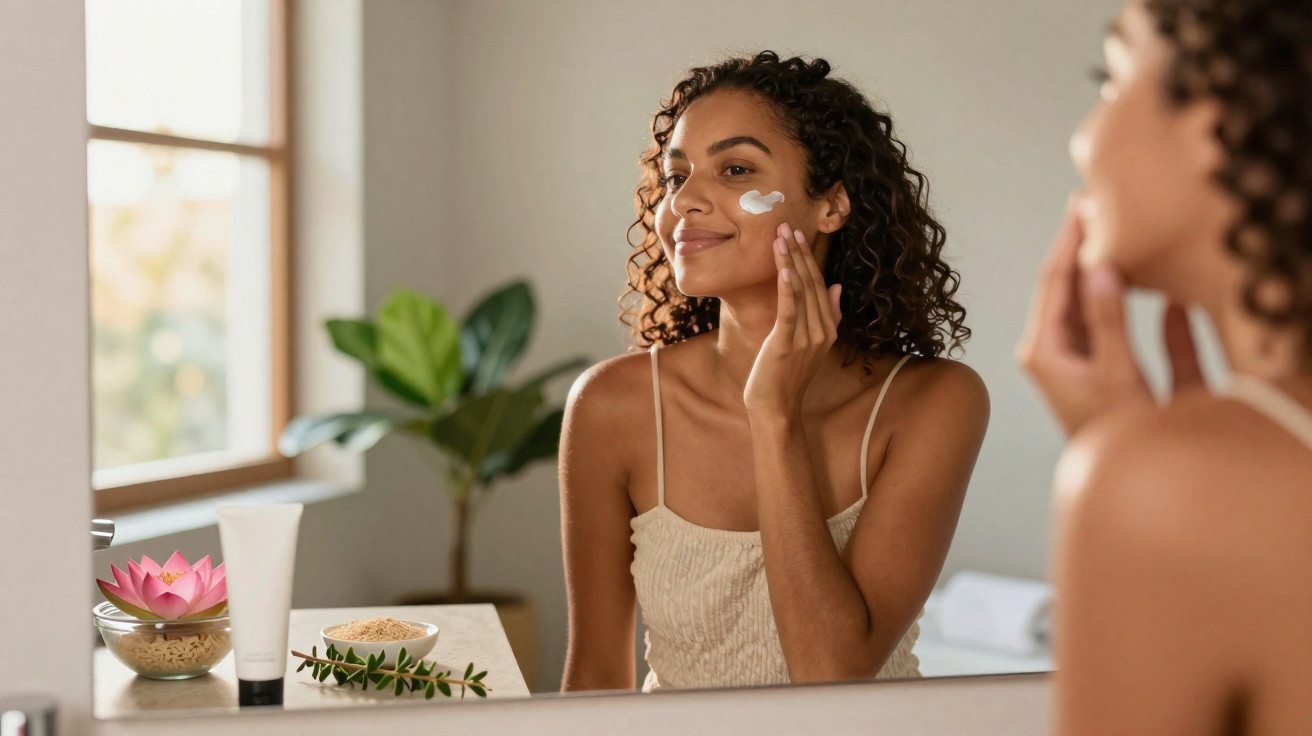
Many women struggle with a dull complexion, visible pores and the first fine lines - and a new organic beauty cream is now causing quite a stir.
Catching your reflection in the morning and seeing tired-looking skin, enlarged pores and small imperfections can be deeply frustrating. A basic moisturiser often isn’t enough at that point. This is exactly where a day cream comes in that is earning strikingly strong reviews on a major beauty ratings site - and, according to users, makes the complexion look smoother, more even and noticeably more radiant.
Why your complexion can suddenly look tired
Our skin is under constant pressure: fine dust pollution, UV rays, blue light, stress and too little sleep. Together, these factors drive oxidative stress. The result:
- The skin’s surface looks uneven, with small bumps and texture more obvious.
- Pores look larger, particularly through the T-zone.
- The complexion loses its glow and appears flat.
- Early lines and fine wrinkles show up more clearly.
Strictly speaking, this isn’t only about wrinkles - it’s about the overall “quality” of the skin surface. What matters is how well the top layer of the epidermis reflects light. The smoother and more uniform it is, the fresher the face appears, regardless of age.
"Well-cared-for, finely textured skin reflects light better and therefore automatically looks younger and more rested."
That’s the promise of SO’BiO étic’s day cream: to hydrate, make pores look refined and brighten the complexion at the same time - without leaving a mask-like finish.
What’s behind the “perfecting” day cream
SO’BiO étic’s “Crème Hydratante Perfectrice Jour – Pour une Peau Parfaite” is a certified organic skincare product positioned very deliberately as an all-rounder. The brand combines three key groups of active ingredients to tackle several common concerns in a single step.
Lotus as a shield against early skin ageing
At the heart of the formula is an extract of sacred lotus from organic cultivation. This active ingredient is presented as a powerful antioxidant. By neutralising free radicals that can attack collagen and elastin, it’s intended to help counter the early signs of fatigue and ageing.
Within the formula, lotus is treated as a “radiance activator”: it is meant to revive natural luminosity so that dull, tired skin looks fresher again. For many users, this glow effect is precisely what sets it apart from a standard moisturising cream.
Witch hazel and zinc: a pore-refining finish for skin
To address visibly enlarged pores, the cream relies on a pairing of witch hazel water and zinc PCA. Witch hazel is known for its astringent (gently tightening) effect. Combined with zinc, the reported outcomes are:
- Pores look finer and less noticeable.
- Shiny areas - especially forehead, nose and chin - appear more matte.
- The skin barrier remains steadier and reacts less sensitively.
Zinc PCA also helps support skin balance, particularly for combination skin that is prone to blemishes. Many users report smoother areas of skin, softer transitions and less prominent pores - especially when the cream is used daily as a base under make-up.
Rice powder for a velvety, shine-free finish
Another notable component is organic rice powder. It’s designed to mattify without making skin look flat or overly “powdered”. It absorbs excess sebum and creates a soft-focus effect:
"Rice powder works like a built-in soft-focus filter: shine disappears and small flaws visually fade into the background."
The formula is rounded out with plant-based glycerin and gentle emollients that keep the skin hydrated without leaving a greasy film. The aim is a balance of nourishment and lightness - particularly relevant for anyone who wears make-up or tends towards combination skin.
How users say the cream performs day to day
On the review platform Beauté Test, the product scores a very solid 4 out of 5 points from over 200 submissions. Many reviews are surprisingly specific. The most commonly mentioned results include:
| Perceived effect | What users describe |
|---|---|
| Smoother skin | Less noticeable texture, a softer surface, and make-up settling less into lines. |
| More radiance | The face looks more awake, the complexion appears brighter, and there’s less of a morning “grey cast”. |
| Refined-looking pores | Pores seem smaller, especially around the nose and cheeks, and skin looks more uniform. |
| A good base for make-up | Foundation spreads more easily, lasts longer, and there’s less shine through the day. |
Many users emphasise an “instant effect”: after only a few applications, the complexion reportedly looks calmer and more even, with fine irregularities appearing less visible. Others describe changes that become clearer after several weeks, such as more uniform tone and smoother-looking texture.
Most people find the hydration comfortable and sufficient for normal skin, slightly dry skin or combination skin. Those with very dry skin sometimes find it isn’t quite enough during very cold winter periods, and then reach for a richer night cream or add a separate serum.
How to fit the cream into your routine
To get the best out of a “perfecting” cream, it’s not just what’s in the jar - it’s also how you use it. Based on user experiences, a few practical pointers come up repeatedly:
- Cleanse thoroughly but gently in the morning - choose a mild gel or milk cleanser and avoid harsh scrubbing.
- If needed, apply a light serum (for example with hyaluronic acid or niacinamide), particularly if you’re dealing with dryness or redness.
- Apply the cream in a thin layer and work it in well, especially across the T-zone.
- Wait around ten minutes before sunscreen or primer, as the texture can otherwise pill slightly.
- Apply make-up as desired - many users say they need less foundation.
As a night product, it tends to suit uncomplicated skin or combination skin best. If you lean towards dryness, it’s often paired in the evening with a richer cream or an oil.
Five everyday habits that can undermine your complexion
Even the best cream can only go so far if day-to-day factors constantly work against your skin. The source highlights five points that directly affect how even your complexion looks.
Too little sleep
While we sleep, cell regeneration runs at full speed. When those hours are missing, metabolic by-products can build up, microcirculation suffers and the skin can look dull and blotchy. Dark circles and redness become more noticeable, and the complexion loses clarity.
The sugar trap in your diet
High sugar intake triggers a process known as glycation. Sugar binds to proteins such as collagen and elastin, causing these structures to stiffen. Skin then loses elasticity and may look flat or slightly yellowed. The outcome is a tired, overworked appearance - despite skincare.
Sleep position and creasing lines
If you regularly sleep on your side or on your front with your face pressed into a pillow, you create mechanical folds. These “sleep lines” may smooth out at first, but can become etched over time, particularly around the eyes and mouth. Better-quality textiles and consciously training yourself to sleep on your back can help.
Ongoing stress in daily life
Chronic stress raises cortisol. This hormone can damage collagen structures, weaken the protective barrier and encourage blemishes, redness and dehydration lines. At the same time, facial muscles tense - forehead, jaw and around the mouth - which can deepen expression lines.
Hard tap water
Very limescale-heavy water can leave mineral residue on the skin. That may shift the pH balance, make the surface look dull and increase feelings of tightness. Some skin types then respond with redness or flaking. A mild facial toner or a thermal-water spray after cleansing can help rebalance things.
Who this cream is particularly suited to
Both the product description and user feedback suggest these skin types may benefit most:
- Combination skin with occasional blemishes and larger pores.
- Normal skin with a dull, slightly uneven complexion.
- Early signs of lines and fatigue, for example from the mid-20s to 40.
- Beauty fans looking for a lighter, certified organic alternative to silicone-heavy primers.
If you’re very prone to dryness, eczema (atopic dermatitis) or rosacea, it’s sensible - as with any new skincare - to patch test carefully first, for example on a small area or alongside a very soothing basic routine.
What the hype around “perfect skin” often overlooks
As appealing as the promise of “almost perfect” skin may sound, no product can erase genetics, deeply set wrinkles or pronounced scarring. Creams like this mainly act at the surface level: they smooth texture, improve light reflection and soften differences in tone. That’s why the overall effect can look significantly more harmonious.
With realistic expectations, a well-formulated day cream like the one described here can be genuinely helpful. Combined with consistent sunscreen, minimal tobacco use, moderate sugar intake and enough sleep, a clear synergy can develop: skin simply has a better chance to show its natural potential - and, for many users, that matters more than a perfectly filtered result.



Comments
No comments yet. Be the first to comment!
Leave a Comment