
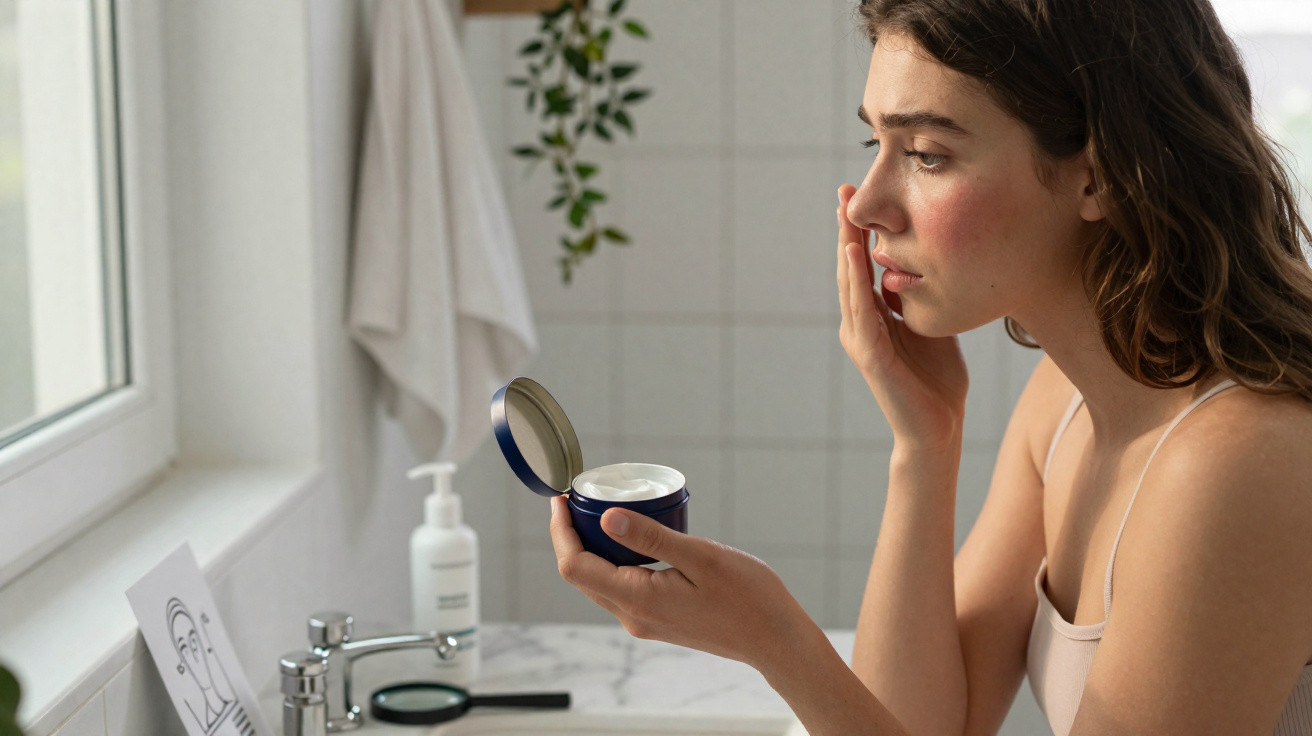
It’s the tin you spot in your mum’s bathroom, tucked into your gran’s bedside drawer, or sitting by your own basin - a little battered, carrying that unmistakable scent of “clean childhood”. For decades, Nivea cream has been the dependable background character: rich, inexpensive, and ready whenever skin feels dry, tight or worn out.
But under the comfort of that familiar routine, a less cosy conversation has been brewing among specialists. Dermatologists and toxicologists are scrutinising ingredient lists, following them back through refining methods, regulations and what long-term exposure data can (and can’t) tell us. Their take is a touch less soothing than the cream itself.
So the question lands: what if that innocent-looking blue tin isn’t quite as harmless as it appears? And what if your skin has been quietly picking up the tab?
Nivea cream: from icon to question mark
Twist open a tin of Nivea and you hardly need to think about what comes next. The product is thick and white with a slight sheen; you scoop it out, smooth it over, and almost immediately your skin feels wrapped - protected, even “sealed” off from the outside. That protective coating is exactly what devoted users appreciate.
Clinicians tend to describe it differently. What they see is a classic water-in-oil emulsion built largely around mineral oils and petrolatum - petroleum-derived ingredients. In documentation they’re considered “safe” and are extensively refined. On real skin, though, they mostly remain on the surface, forming an occlusive layer that can hold sweat, bacteria and irritants close to the skin.
That’s the uncomfortable tension: a product marketed for comfort can, for some people, quietly worsen irritation. The timeless blue tin starts to look less like a classic and more like a leftover from an era before shoppers paid much attention to labels.
The data around interest is shifting, too. Worldwide sales of Nivea still run into the hundreds of millions, yet searches such as “Nivea cream safe?” and “Nivea ingredients harmful?” have surged in recent years. Skincare communities that once celebrated its “old-school simplicity” now regularly dissect paraffinum liquidum, synthetic fragrance and possible allergens.
In dermatology practices, there’s also a familiar confession. Patients dealing with perioral dermatitis or persistent facial redness often admit - sometimes a bit sheepishly - that they’ve been applying a heavy cream like Nivea to their face every night. When they stop, many notice improvement over the following weeks. It isn’t a controlled clinical trial, but it’s a recurring pattern that specialists increasingly take seriously.
Then there’s the regulatory context. European cosmetics rules are stringent, yet watchdog organisations still push brands on trace contaminants in mineral oils, including MOAH (Mineral Oil Aromatic Hydrocarbons). Companies emphasise that their refining keeps these within safe limits, but public confidence doesn’t always track legal compliance. A product can meet the rules and still feel misaligned with what people want to use on their skin in 2026.
At first glance, Nivea cream reads as “simple”: water, mineral oil, petrolatum, glycerin, a handful of emulsifiers, fragrance, preservatives. In reality, that simplicity is doing specific work. The mineral oils are what create the distinctive glide and shine. They can reduce water loss in the short term - but they don’t nourish skin; they function more like cling film.
For truly dry, cracked hands in winter, that can be a genuine relief. For acne-prone or reactive facial skin, the same layer can trap dead skin cells, warmth and bacteria, and interfere with the skin’s delicate microbiome. Repeated nightly over years, small disruptions can gradually become visible issues.
The fragrance blend is another common sticking point for dermatologists. It’s responsible for Nivea’s signature “clean” smell, yet fragrance is among the most frequent triggers of contact dermatitis. Add potential allergens such as lanolin alcohol for people who react to wool-derived ingredients, and the promise of being “for all skin types” starts to sound a little hopeful. The formula hasn’t suddenly changed - our willingness to accept uncertainty has.
How to protect your skin when your go-to cream is in doubt
If you’ve used Nivea for years with no clear problems, there’s no requirement to bin it tomorrow. A more balanced approach is to adjust how you use it - and where. Treat the blue tin like a rescue option rather than a default daily face moisturiser.
Keep it for short-term, targeted situations: split knuckles in cold weather, dry elbows, or heels under socks overnight. If you use it on your face - particularly if you’re prone to breakouts or flushing - step back and try a two-week break. In that window, switch to a lighter, fragrance-free moisturiser built around squalane, ceramides or shea butter.
If redness settles or your pores feel less blocked, your skin has offered a quiet response. Nothing dramatic - simply your barrier signalling that it would rather not be smothered.
Checking ingredient lists isn’t exciting, but it’s powerful. Start with three terms on any cream you own: mineral oil/paraffinum liquidum, petrolatum, fragrance/parfum. If all three sit near the top of the list and you’re battling spots, blackheads or unexplained irritation, take that as a useful hint.
Conversely, look out for “fragrance-free”, “non-comedogenic”, and humectants like glycerin, hyaluronic acid or aloe, alongside barrier-supporting ingredients such as ceramides or niacinamide. They’re not a magic guarantee, but they align with what modern dermatology tends to rely on in clinical care. And let’s be realistic: hardly anyone reads every label in a shop while rushing between appointments.
So build yourself a small “safe list” in your phone - a few brands and product names that meet those criteria. When you’re tired or in a hurry, you’ll still have a solid fallback.
Underneath the ingredient debate sits something more delicate: our attachment to routine and reassurance. Plenty of people stick with Nivea not because they believe it’s the best science can offer, but because its scent reminds them of someone they loved. Changing products isn’t purely practical; it can feel like letting go of a memory.
“My job isn’t to scare people out of their favorite cream,” says one London-based dermatologist. “It’s to show them that a €3 product from 1960 doesn’t have to be the gold standard for their 2026 skin.”
In day-to-day terms, you can make the shift feel gentler with a few simple moves:
- Stop using Nivea on your face first, then reconsider hands and body if needed.
- Keep one tin for nostalgia (travel, emergencies) while you trial other options.
- Replace “blue tin moments” with a different small ritual: a soothing facial mist, or a quick hand massage.
More broadly, it’s about allowing yourself to change. Skincare isn’t a loyalty programme - it’s an ongoing exchange between who you used to be and the skin you have today.
A cream, a culture, and the cost of comfort
Most of us know the feeling: you open an old product, breathe it in, and a whole fragment of the past comes rushing back. Nivea has long benefited from that reflex. Its advertising leans on care, mums, and touch - not molecules, refining techniques, or occlusive layers.
As ingredient knowledge spreads through TikTok and Reddit, opinions are diverging. One side defends the blue tin as a “classic that obviously works”, pointing to soft skin and grandparents who applied it daily and lived to 90. The other side focuses on texture, comedogenic ratings and low-grade inflammation, and asks a blunt question: if better options exist, why settle?
Between those poles sits a quieter majority, torn between wanting fewer products and suspecting their skin might feel calmer, lighter and less congested with a different moisturiser. They don’t need scare stories. They need clear information and permission to experiment without feeling guilty.
Even with the criticism, Nivea cream also illustrates a bigger issue: how slowly large heritage brands tend to evolve. Changing a formula that sells in the millions means reworking manufacturing, supply chains and marketing narratives. The result is an odd mismatch - our lives are hyper-digital and hyper-informed, while the everyday cream in the cupboard can feel like it never left the 1970s.
That may be why experts increasingly sound impatient. Not because one tin is a crisis by itself, but because it reflects a wider pattern where convenience and nostalgia repeatedly beat long-term skin health. Subtle redness, clogged pores, barrier disruption - these don’t trend. But they’re exactly what dermatologists deal with daily.
The better question isn’t “Is Nivea cream evil?”. It’s “What kind of relationship do you want with your skin?” One driven by habit and automatic trust, or one where you occasionally pause, read, and adjust? You don’t need to become anxious or throw half your bathroom away tonight. You can simply pay attention to how your skin feels an hour, a day, and a week after you apply something.
If that famous blue layer leaves you comfortable, calm and irritation-free, that’s your answer. If instead your skin feels greasy, itchy, overly shiny, or keeps breaking out in the same areas, that’s an answer too. Either way, the control quietly returns to you - not the branding on the lid.
| Key point | Detail | Why it matters to you |
|---|---|---|
| Occlusive formula | High in mineral oil and petrolatum, creating a strong surface film | Helps explain why skin can feel smothered or congested |
| Fragrance and allergens | Signature scent plus potential irritants like lanolin alcohol | Clarifies why redness, itching or dermatitis may develop over time |
| Smarter usage | Keep for hands/rough areas, avoid daily facial use, test alternatives | Offers practical steps without panic or waste |
FAQ:
- Is Nivea cream bad for your skin? Not automatically. For some people it’s tolerated and comforting; for others, the heavy, occlusive formula and fragrance can trigger breakouts or irritation, especially on the face.
- Can I still use Nivea on my face every day? You can, but many dermatologists now suggest reserving it for short-term or spot use and choosing a lighter, fragrance-free moisturizer for daily facial care.
- Is mineral oil really dangerous? Cosmetic-grade mineral oil is highly refined and legally considered safe, yet it doesn’t nourish the skin and can feel suffocating or comedogenic on some skin types.
- What are safer alternatives to Nivea cream? Look for creams with glycerin, ceramides, shea butter, squalane and no added fragrance; brands that market to sensitive skin or eczema are often a good starting point.
- Should I throw away my Nivea tin right now? No need for dramatics. Finish it on hands, elbows or feet if you like, observe how your skin reacts, and slowly transition your face to a more modern formula if you notice improvements.



Comments
No comments yet. Be the first to comment!
Leave a Comment