
Hair can look freshly washed first thing in the morning and then develop an oily sheen before the day is out, especially around the fringe and the crown. If you want to mask that greasiness without jumping straight into another wash, a tiny amount of cornflour or rice starch can work as a quick, emergency fix at the roots.
Why does hair get oily so quickly?
Oiliness comes from the sebaceous glands in the scalp, and it helps protect both the skin and the hair shaft. For some people, however, sebum spreads very fast-particularly on straight, fine hair. Heat, sweating, hormonal changes and the habit of repeatedly touching the roots can all make hair look heavier and greasier.
Washing your hair every day is not automatically harmful when you use suitable products, but dyed, bleached or naturally dry hair may need extra care. In those situations, leaving longer gaps between washes can reduce how often the lengths are exposed to hot water, shampoo and the friction that comes with towel-drying.
How does starch absorb oil?
Cornflour and rice starch are very fine powders that can soak up some of the oil sitting on the surface of the hair. The result is similar to a conventional dry shampoo: the roots temporarily lose their greasy shine, gain a touch of volume and look looser-although the hair is not truly cleansed.
Because this method involves no water or lather, it can be handy between washes and helps you avoid immediately rinsing coloured hair again. That does not mean starch itself protects or preserves hair colour. It simply postpones washing-an action that can contribute to the gradual fading of certain dyes.
How do you apply it without leaving white residue?
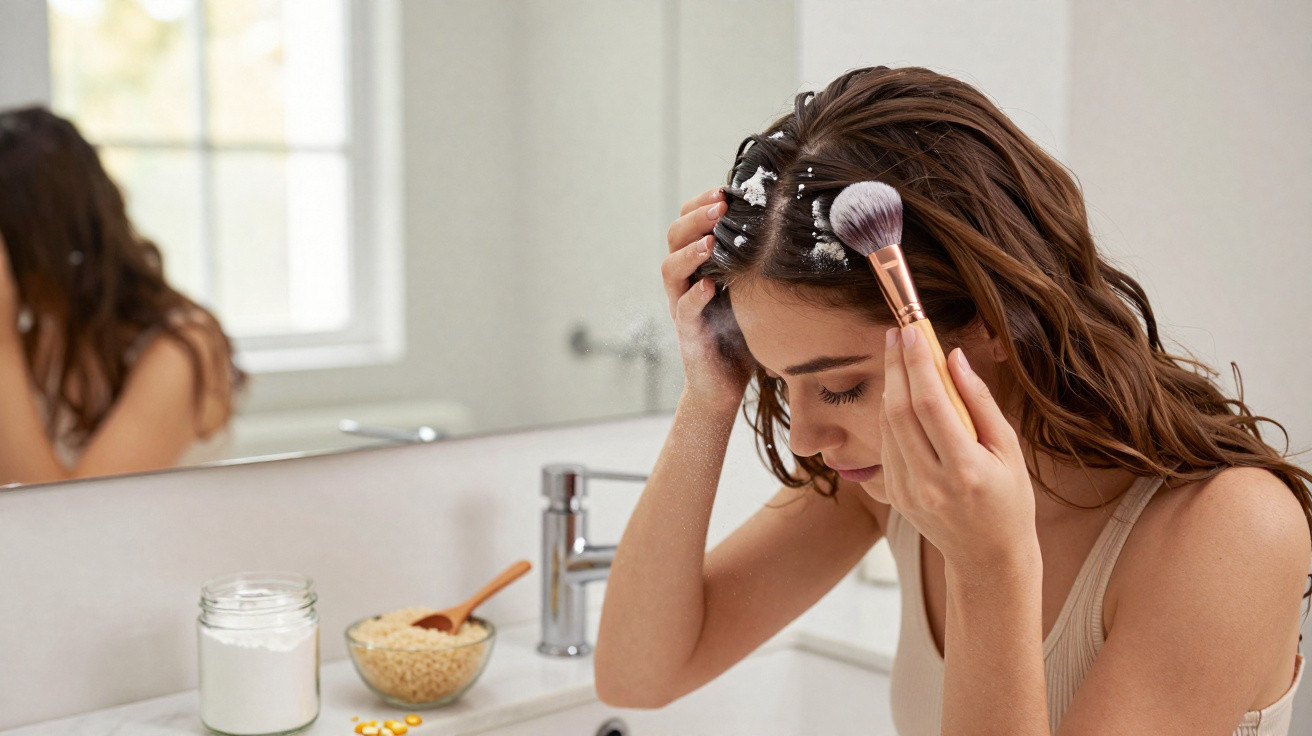
The key is to use the smallest possible amount and focus only on the areas that are genuinely oily. Put a little starch into a clean container, then apply it with a dry make-up brush, gently tapping it onto the roots. After that, wait about five minutes so the powder can absorb the excess sebum.
- Section the hair into small parts before you start.
- Touch the brush only to the areas with an oily shine.
- Wait roughly five minutes without adding more product.
- Massage the roots lightly with your fingertips.
- Brush the hair thoroughly to remove all visible excess.
On dark hair, any surplus shows up quickly and can leave a greyish cast. For that reason, start with almost nothing and repeat only if needed. Applying the powder at night can also help it distribute more evenly, but it should be removed carefully before you comb or style your hair.
Watch the video shared by the YouTube channel Isa Salustiano with 4 special tips on how to care for oily hair.
What precautions help prevent scalp problems?
Despite how convenient it is, starch is not a replacement for ordinary shampoo because it does not fully remove sweat, dead skin cells, micro-organisms or built-up residue. Dermatologists warn that repeatedly using dry products without regular washing can encourage itching, flaking, irritation and blocked follicles.
Do not apply it to cuts, inflamed patches or a very sensitive scalp. It is also important not to inhale the powder during use, and to stop immediately if you notice burning or itching. If you have severe oiliness along with persistent dandruff, redness or hair shedding, seek a dermatological assessment.
When is this trick actually worth it?
Starch works best as an occasional measure to refresh the look of your roots before an appointment, after the gym or on an especially busy day. It is inexpensive, does not rely on an aerosol and can extend the “just washed” appearance for a few hours-provided you apply it sparingly and brush it out completely.
Treat it as a strategic pause, not a permanent substitute for hygiene. Start with a small amount, pay attention to how your scalp responds and wash your hair once product build-up occurs. With that simple care, you can reduce unwanted shine without turning a quick fix into a new hair issue.





Comments
No comments yet. Be the first to comment!
Leave a Comment