
The woman standing in front of you on the Tube is dealing with the exact same thing. At 8 a.m., her blow-dry is smooth, glossy, almost self-satisfied. Three stops later, as the doors slide open, the city’s humidity has already made itself at home: her ends have puffed up and a fizzy halo has appeared - one she absolutely didn’t pay for. She checks her reflection in her phone, pats everything down, and you catch that tiny flicker of surrender in her eyes.
Hair that behaves differently in every room, every season, every forecast. Hair that seems to double in size the moment the air turns heavy.
Certain haircuts make that fight harder.
Others quietly shift the odds.
The long, structured, layered cut hair pros swear by when humidity plays with your volume
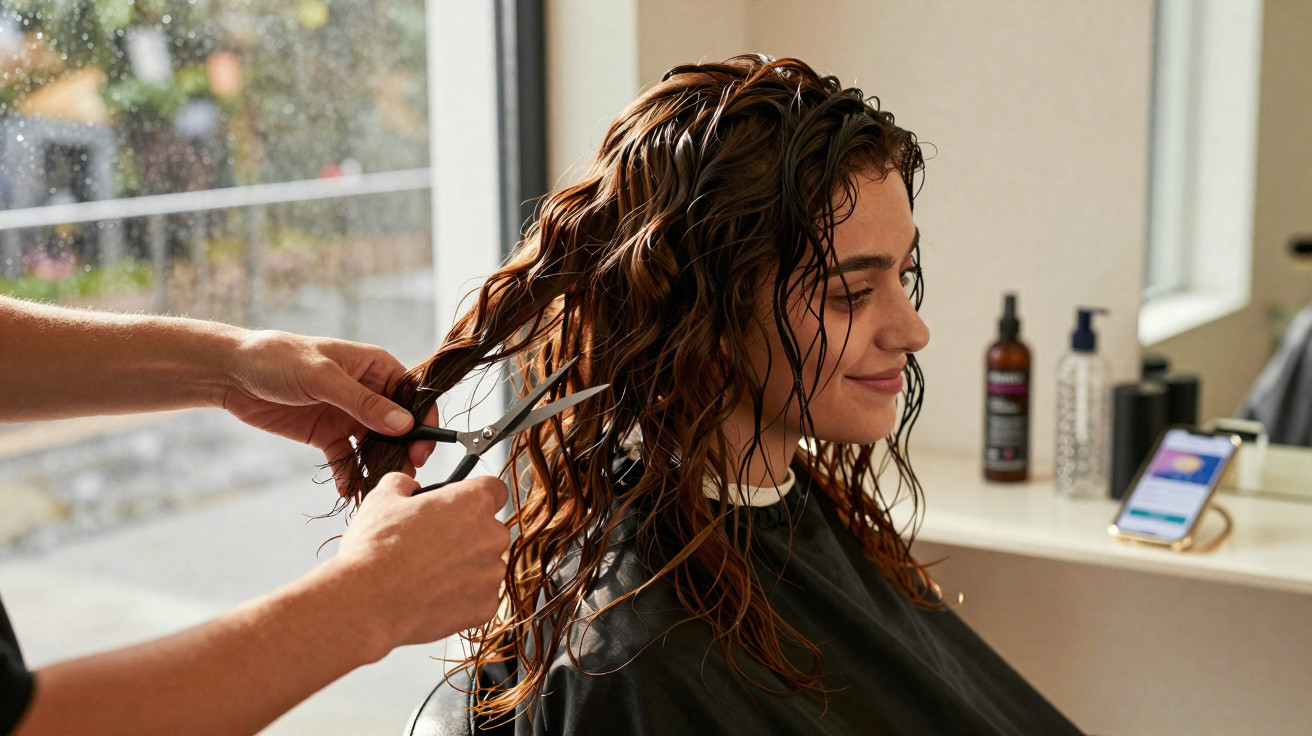
Ask three skilled stylists how to handle hair that swells with moisture and you’ll likely hear the same advice, shared like an insider tip: choose a long, structured, layered cut with weight at the ends. Not the choppy, ultra-short layers that go wild the second summer arrives. Instead, a longer, more sculpted shape that lets gravity do some of the work.
In salons, you’ll hear people talk about “anchoring” the hair. When humidity kicks in, this cut doesn’t try to battle the expansion - it manages it. The roots can lift softly, the mid-lengths still have movement, and the ends stay substantial rather than shooting out in thirty directions.
The outcome: volume, absolutely - but without the mayhem.
Imagine a cut that skims the shoulders, with gentle face-framing layers beginning below the cheekbones rather than up near the brows. Nothing overly blunt, nothing too wispy. Just understated structure that gives your hair a pathway when the air turns damp. A New York stylist I spoke to calls it “the humidity buffer” – the kind of shape that can look even better on sticky days.
One of her clients, Ana, has thick, wavy hair that used to treat umbrellas like breakfast. When it was dry: stunning. When it rained: triangle. After years of heavy thinning and stylists who loved a razor a bit too much, she let this pro grow her hair into a longer, layered cut that landed just past the collarbone. Then, during the first week of storms, something unexpected happened.
Her hair became bigger. But also… nicer.
What sits behind this “miracle” is straightforward physics. Humidity makes the hair shaft swell and encourages the natural texture to spring up. If the ends are over-thinned or the layers are cut too short, that swelling has only one option: outwards - which creates volume in all the wrong places. A longer outline with weight keeps the lower half of the hair steadier.
Those internal, well-positioned layers work like guides, steering curls and waves into shape rather than letting them turn into a frizz cloud. Short, choppy layers can act like multiple mini haircuts that each respond differently to the weather. A single, longer silhouette moves as one, so even when it expands, it still appears deliberate. That’s the quiet brilliance of the right cut in damp air.
How to ask for the right cut (and what to avoid in the chair)
The most important step happens before the scissors touch your hair. Sit down and say: “My hair doubles in volume with humidity, and I want a long, layered cut that grows out well and keeps the ends full.” Then bring a picture - not of pin-straight, flattened hair, but of hair with soft, controlled volume.
Request long layers that begin below the chin or around the collarbone, while keeping the strongest weight line near the bottom. In practice, that means avoiding excessive thinning through the tips. A subtle face frame can reduce heaviness around the cheeks, but the big priority is a silhouette that narrows gradually rather than abruptly.
You’re not aiming for flat. You’re giving your natural “humidity hair” a shape that suits you.
The most common mistake is walking in and saying, “I go huge in humidity, please remove as much bulk as possible.” That’s the sentence that brings out thinning scissors, aggressive razoring, and layers cut too short over the crown. For a week, it looks amazing - almost suspiciously weightless. Then a muggy evening arrives, and your hair inflates into a mushroom you never asked for.
Most of us know that moment: you catch yourself in a restaurant loo mirror and your hair has developed an entirely new personality since you left the house. The reality is simple - trying to make hair “skinny” is the quickest route to losing control of your volume. What works is keeping thickness where it matters, not removing hair everywhere.
And honestly, hardly anyone keeps up perfect routines every day: the daily blow-dries, the full product line-up, the constant fixing. So your haircut has to do the heavy lifting when you’re only making a half-effort.
A London‑based hairstylist summed it up perfectly: “With humidity‑sensitive hair, the cut should work hardest on the days you work the least. The more your hair reacts to the weather, the more structure it needs, not less.”
- Ask for: Long layers starting below the chin, with a strong, full outline at the ends that doesn’t look chewed up or see‑through.
- Be specific about your weather: tell your stylist if you live somewhere tropical, coastal, or with big seasonal shifts, so they cut for real life - not just the salon mirror.
- Avoid heavy thinning at the lower lengths, extreme razoring on hair that already frizzes, and short crown layers that flick and kink as soon as the air turns damp.
- Design it for low-effort days: it should still look fine air-dried with maybe one cream or spray, not a seven-step styling routine.
- Book a “shape check” every 8–12 weeks to maintain the structure, so your hair doesn’t drift back into one solid block that expands all at once.
Living with weather-shifting hair (and letting the cut work for you)
Hair that reacts to humidity can feel like a personality you didn’t choose - one that changes mood halfway through the day. The right cut won’t erase that; it will steer it. You’ll notice that on the most humid days, your hair doesn’t turn on you - it settles into a softer, fuller version of itself. When the air is dry, the very same cut looks sleeker and calmer, like the same friend in a different outfit.
Some people start planning around the forecast: more relaxed shapes and tousled texture during stormy spells, slightly more polished styling when the air is crisp. The goal isn’t to defeat humidity forever. It’s to reach a point where the weather no longer decides whether you feel comfortable being photographed - or saying yes to a last-minute drink after work.
You might even catch your reflection in a bus window on a sticky evening and think, “Actually, that looks quite nice.” That’s when you know the haircut is doing its quiet job.
| Key point | Detail | Value for the reader |
|---|---|---|
| Choose long, structured layers | Layers that begin below the chin, with weight through the ends, help the hair move as one as it swells | Volume appears intentional, not random or “triangle-shaped” in humidity |
| Avoid over-thinning and short crown layers | Too much thinning and choppy short layers respond unevenly to moisture | Helps prevent the dreaded mushroom shape or fluffy halo on damp days |
| Communicate your real lifestyle | Tell your stylist how often you use heat and what climate you live in | Results in a cut that air-dries well and holds up without daily, salon-level effort |
FAQ:
- Question 1 What exact haircut should I ask for if my hair gets huge in humidity? Ask for a medium‑to‑long cut with long, blended layers that start below your chin or collarbone and a strong, full outline at the bottom. Tell your stylist you want to keep weight at the ends to control expansion, not thin everything out.
- Question 2 Will bangs work if my hair volume changes with the weather? Bangs can work, but curtain bangs or longer fringe that hit around the cheekbones or lips are safer. Very short or blunt bangs tend to kink, frizz, and separate when the air is damp, which is harder to manage day to day.
- Question 3 Is a bob a bad idea with humidity‑sensitive hair? Not necessarily, but ultra‑blunt or very short bobs can puff out fast. A slightly longer lob with soft internal layering and a gentle bevel at the ends usually behaves better as the air gets heavier.
- Question 4 Do I need special products if I get the right cut? The cut does most of the heavy lifting, but a light leave‑in cream or gel‑cream and a humidity‑resistant finishing spray help guide the texture. You don’t need a whole arsenal, just one or two products that work with your natural pattern.
- Question 5 How often should I trim to keep the “humidity‑friendly” shape? Most pros suggest every 8–12 weeks. That timing keeps the structure and weight balance, so your hair doesn’t turn into one heavy mass that reacts unpredictably when the moisture level jumps.





Comments
No comments yet. Be the first to comment!
Leave a Comment